
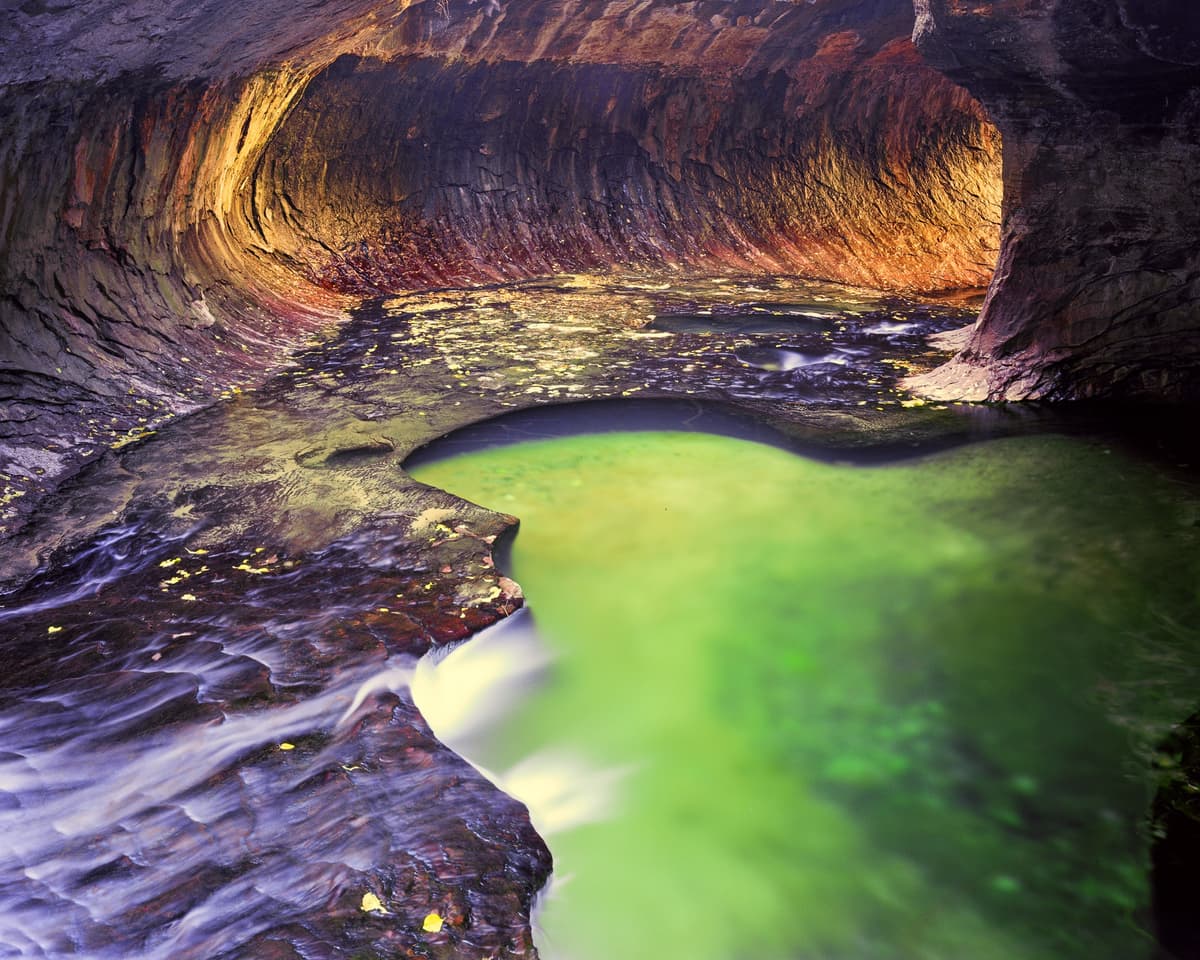
About Marty Quinn
Marty Quinn has been photographing the Southwest for over twenty-five years. Utah, Arizona, the desert regions — he keeps going back. What started as taking pictures on trips became something more serious over time. He shoots large format film, which most people think is unnecessary now, but there's a reason he sticks with it.
His work tends to find its way to collectors and designers looking for something other than the standard sunset shot. He spends a lot of time on each image, and it shows in the prints.
Why Large Format Film?
Most photographers switched to digital years ago. Marty still shoots 4x5 film. It's not a retro affectation — the image quality really is different. Each sheet of film captures more detail than digital sensors can, and the prints have a depth and tonal range that's hard to explain until you see them in person.
The tradeoff is that the process is slow and heavy. The camera and gear weigh 25-30 pounds, often carried miles into remote spots. Every shot requires setting up a tripod, composing under a dark cloth, calculating exposure. You might get four or five images in a day of shooting. But that slowness is part of the point — every frame is considered.
There's also something to the fact that each transparency is a physical object. Not a file that can be copied infinitely. That matters to some collectors.
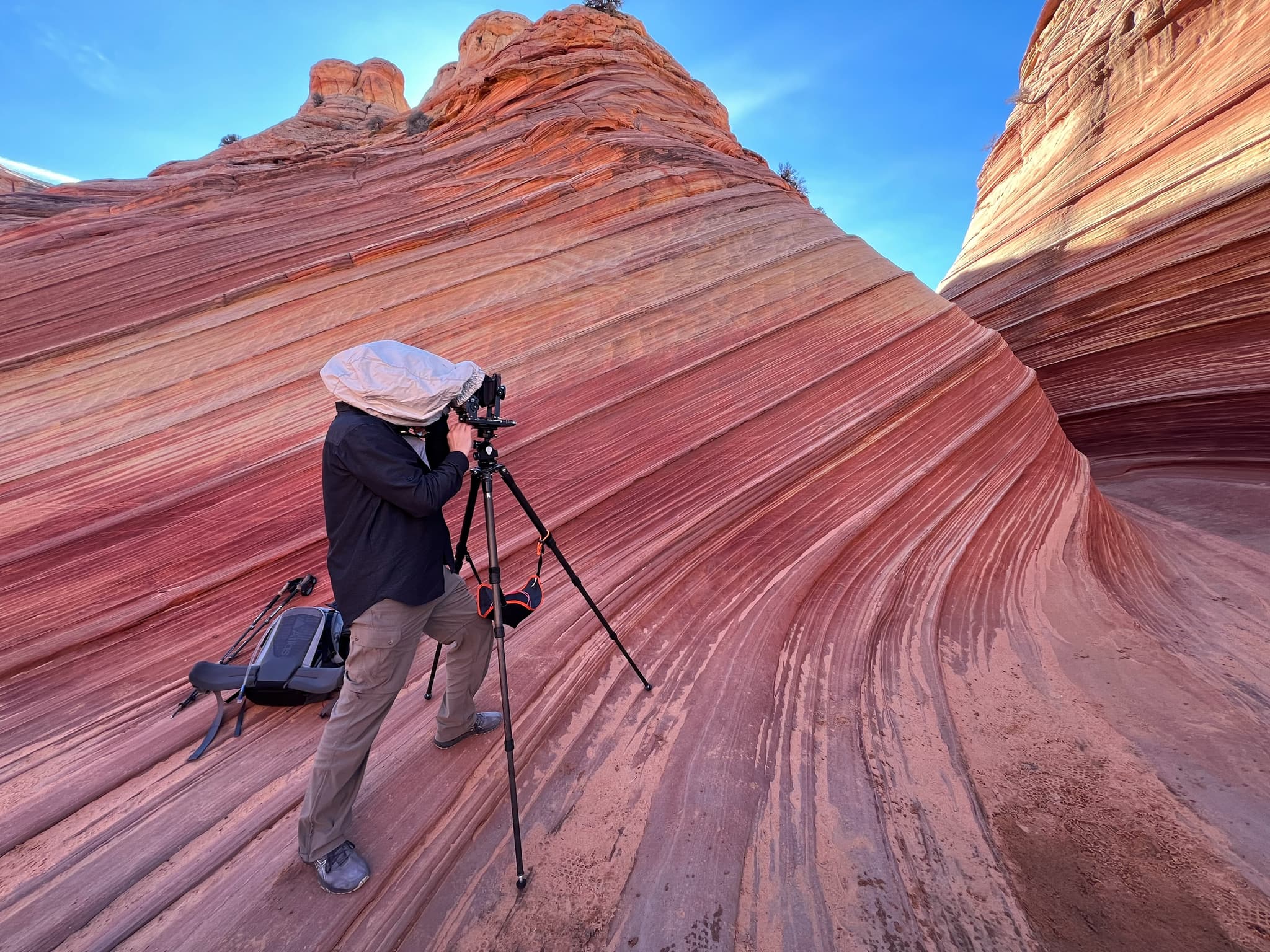
Composing under the dark cloth at The Wave, Arizona — the deliberate process of large format photography
Photo by Tony Santo
Light, Time, and Place
The Southwest doesn't sit still. The same rock formation looks completely different at sunrise versus midday versus storm light. Marty's work tries to capture not just what these places look like, but what they feel like at a particular moment.
This takes time. He'll research a location, visit it multiple times under different conditions, study how light moves across it throughout the day and across seasons. Sometimes it takes years before everything lines up. That kind of patience comes from actually caring about the places, not just wanting a good shot.
The compositions draw from traditional landscape painting — attention to geometry, foreground-background relationships, natural lines in the rock and sky. The goal is images that hold up over time and offer something new each time you look.
The Technical Side
Large format photography is precise work. Composition on the ground glass, exposure calculations using zone system methods, waiting for the moment when conditions are right. It's slow, but the results hold up to scrutiny.
Film choice depends on the subject. Fuji Velvia for saturated color on red rock and dramatic skies. Kodak T-Max for black and white when the subject is more about shape and texture. Fuji Provia when a scene calls for something more subtle.
After shooting, each transparency gets scanned at high resolution — we're talking 500+ megapixels equivalent. The files preserve everything in the original film while allowing for archival printing on museum-quality papers. These prints should last well over a hundred years.
From Scouting to Print
The work starts well before setting up the camera. Topographic maps, satellite imagery, weather patterns — anything that helps figure out where to be and when. GPS marks potential compositions for return visits.
In the field, it's methodical. Camera on tripod, composition refined on the ground glass, camera movements adjusted for perspective and depth of field. Exposure measured with handheld spot meters using zone system techniques — the same approach Ansel Adams developed, still useful because it gives precise control.
Film processing happens in-house with controlled techniques for each film stock. Keeping the whole process under one roof means consistency from capture through final print.
The Work
The portfolio covers iconic Southwest spots — Monument Valley, Zion, Death Valley — alongside lesser-known places found through years of wandering. These are images meant for homes, offices, and serious collections.
Large prints reveal a lot: individual sand grains, rock texture, subtle gradations in the sky. That level of detail rewards attention. The images tend to show new things over time, which makes them work well in spaces where they'll be seen every day.
Each limited edition print comes with documentation — title, location, date, film type, edition size, print number. The kind of provenance that matters for fine art. See our print options and pricing or browse the full collection.
Published Work
The work has been published in print beyond the gallery wall. Photographs appear in A Comprehensive Guide to Digital Close-Up Photography (AVA Publishing, 2005) by John Clements, a reference book on technique used by photographers learning the craft. A photograph was also selected for The Last Frame in Outdoor Photographer magazine (June 2008) — the column reserved for a single standout image closing each issue.
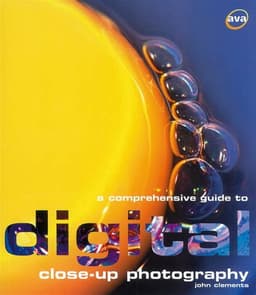
A Comprehensive Guide to Digital Close-Up Photography
John Clements · AVA Publishing · 2005
Photographs by Marty Quinn featured as reference examples in this technique guide for photographers.
Conservation and Respect
Photographing landscapes comes with responsibility. These places deserve respect — staying on trails, leaving no trace, being aware of impact. It's about being a decent guest in places that make this work possible.
Many Southwest locations are sacred to Indigenous peoples — the Navajo, Hopi, and others who've been here for generations. A photographer is a visitor in these places. The goal is to honor the landscapes, not exploit them.
If these photographs help people appreciate the desert and want to protect it, that's worth more than any sale. The Southwest faces real pressure — more visitors, climate change, competing demands on resources. If the images can do some small part to make people care about preservation, that's a good outcome.
The Process in Detail
If you want to go deeper on the equipment, film choices, and field workflow — it's all covered in the blog.
My Large Format Field Kit →
4x5 cameras, lenses, film holders, and everything that makes it into the pack for a shoot.
My Digital Medium Format Kit →
The Fujifilm GFX system and how it fits alongside the film work.
Developing Film with the Stearman Press →
The in-house film development process from exposed sheet to scanned transparency.
Why I Still Shoot Large Format →
The honest case for sticking with 4x5 film when digital is faster, cheaper, and easier.
See the Work
Prints start at $145. Every image is made to order on museum-quality materials and ships with a certificate of authenticity.
Also: View pricing