
My Large Format Field Kit: 4x5 Cameras & Lenses
A detailed look at the 4x5 cameras, lenses, tripod, and accessories I use for landscape photography in the American Southwest. Includes recommendations for photographers building their own large format kit.
This post contains affiliate links to products I personally use and recommend. If you purchase through these links, I may earn a small commission at no extra cost to you. I only recommend gear I've tested in the field.
Building a 4x5 Large Format Field Kit for Landscape Photography
After 25+ years of landscape photography, I've refined my large format kit to what works reliably in demanding desert conditions. Every piece of gear needs to earn its place—when you're hiking miles into the backcountry with 30+ pounds of equipment, there's no room for redundancy.
This guide covers everything in my 4x5 field kit: cameras, lenses, support, metering, and the accessories that make large format photography practical in remote locations. Where possible, I've included links to current alternatives when the gear I use has been discontinued.
Cameras
Arca-Swiss F-Field 4x5
My primary field camera. The Arca-Swiss F-Field offers precise movements, excellent build quality, and a modular design that's lasted decades. It's heavier than some alternatives but the precision is worth the weight for critical landscape work.
Available from: Arca-Swiss USA
Chamonix 45F-2
My lightweight backup camera. When I'm hiking longer distances or want to move faster, the Chamonix comes out. It's remarkably capable for its weight and folds down compact. Excellent value for photographers entering large format.
Available from: Chamonix View Camera
Lenses
Large format lenses are no longer manufactured new in most focal lengths. The lenses I use are all discontinued but can be found on the used market through KEH, eBay, or large format forums. All use standard Copal shutters and cover 4x5 with room for movements.
Schneider 80mm f/4.5 Super-Symmar XL
Ultra-wide for 4x5, equivalent to roughly 24mm on full-frame. Incredible image circle for movements despite the wide angle. I use this for dramatic foreground-to-infinity compositions in slot canyons and tight spaces.
Schneider 110mm f/5.6 Super-Symmar XL
My most-used lens. Wide but not extreme, equivalent to roughly 35mm. Versatile for classic landscape compositions with excellent sharpness and coverage.
Schneider 150mm f/5.6 Apo-Symmar-L
The classic "normal" lens for 4x5, equivalent to roughly 45mm. Natural perspective without distortion. Compact, lightweight, and tack sharp—often the first lens I grab when I'm not sure what the scene will call for.
Schneider APO Symmar-L 210mm f/5.6
Standard/portrait length for 4x5, equivalent to roughly 60mm. Sharp, contrasty, and compact. Good for isolating details and more intimate landscape scenes.
Nikon 300mm f/9 Nikkor-M
Telephoto option, equivalent to roughly 85mm. The Nikkor-M series is legendary for sharpness in a compact package. The f/9 maximum aperture is slow but fine for landscape work on a tripod.
Nikon Nikkor-T ED 500mm f/11
Long telephoto for compression and distant subjects. Equivalent to roughly 150mm. The ED glass delivers excellent sharpness even wide open. Heavy, but sometimes you need the reach.
Support
Gitzo Systematic Series 3 Carbon Fiber Tripod
Large format cameras demand rock-solid support, especially in the windy desert conditions where I often work. The Gitzo Systematic Series 3 handles everything I've thrown at it—wind, uneven terrain, extended bellows with heavy lenses. The carbon fiber keeps weight manageable while maintaining rigidity.
Available on Adorama: Gitzo GT3543LS Systematic Series 3
Arca-Swiss d4 Geared Tripod Head
Geared heads allow micro-adjustments that ball heads can't match. When you're composing on a ground glass at 4x magnification, even tiny movements matter. The d4 is built like a tank and the geared movements are smooth and precise.
Available on Adorama: Arca-Swiss d4 Geared Head
Vanguard SB-100 Stone Bag
This stone bag creates a handy shelf between tripod legs where I keep film holders, loupe, cable release, and other items I need within arm's reach. Beats digging through a backpack every time you need something. Also adds stability by weighting down the tripod center.
Available on Amazon: Vanguard SB-100 Stone Bag
Metering
Light Meter
I use a Sekonic L-550 which has been discontinued. For photographers looking for a current option, the Sekonic L-858D is the modern equivalent with spot metering, incident, and flash capabilities.
Grey Card
An 18% grey card is essential for consistent metering, especially in tricky lighting conditions. I use the Lightdow 12x12" Grey Card—inexpensive, durable, and comes with a carry bag.
Filters
I use Singh-Ray filters for both polarization and graduated neutral density. They're expensive but the optical quality is worth it for large format where every flaw is magnified. Singh-Ray sells direct from their website—no Amazon availability.
- Singh-Ray LB Warming Polarizer - My most-used filter
- Singh-Ray Galen Rowell ND Grads - 2-stop and 3-stop soft edge
Matte Box
For controlling flare and holding filters, I use the K&F CONCEPT Matte Box. It provides excellent sun shading and accepts standard 4x4 or 4x5.65 filters. A versatile and affordable solution for large format field work.
Focusing and Viewing
Loupe
Critical focus on a ground glass requires magnification. I use a Toyo loupe which has been discontinued. A good current alternative is the eTone 4x Loupe—good optics at a reasonable price.
Dark Cloth
You can't see the ground glass without blocking ambient light. I use the Wanderer Dark Cloth—well made with weighted corners that help in wind.
View Catcher
Before setting up the tripod and camera, I use a view catcher to scout compositions and fine-tune framing. It saves time by letting you visualize the scene at different aspect ratios before committing to a setup. Essential for working efficiently when light is changing quickly.
Available on Amazon: View Catcher Composition Tool
Film and Holders
Film Stocks
I shoot transparency (slide) film for most work, with color negative as backup:
- Fuji Velvia 50 - Discontinued, but I'm working through remaining stock. Unmatched color saturation.
- Fuji Provia 100F - More neutral transparency film, good for varied subjects.
- Kodak E100 - Current Kodak transparency option, clean colors.
- Kodak Portra 160 - Color negative with excellent scanning latitude.
- Kodak Ektar 100 - Saturated color negative, good for landscapes.
- Kodak T-MAX 100 - Fine grain black and white, excellent tonal range.
4x5 sheet film is available from Adorama, B&H Photo, and specialty film retailers.
Film Holders
I use Toyo film holders which have been discontinued. Fidelity and Lisco holders are available on the used market. Keep them clean and test for light leaks regularly.
Film Holder Case
Protecting loaded film holders is critical. The f.64 FH4x5 Film Holder Case holds multiple holders securely and protects them from dust and impacts.
Accessories
Cable Release
A good cable release with a lock is essential for long exposures. I use the Gepe PVC Pro Cable Release, available from B&H Photo.
Changing Bag
For loading film holders in the field or hotel room, a changing bag is essential. The VANZAVANZU Darkroom Film Changing Bag is affordable and works well.
Backpack
Carrying a complete 4x5 kit requires a serious pack. I use Atlas Packs—designed specifically for large format photographers with customizable compartments and excellent load distribution.
Grip Tape for Camera Movements
Large format cameras rely on friction to keep movements in place. Over time, or in certain conditions, movements can slip. The CATTONGUE GRIPS Non-Abrasive Grip Tape adds friction without damaging camera surfaces. Apply it to movement rails or knobs to keep everything locked tight.
Umbrella Holder
Shooting in rain or snow requires protecting your camera while keeping both hands free. A Heavy Duty Umbrella Holder clamps to your tripod and holds an umbrella steady, giving you weather protection without needing an assistant.
Final Thoughts
Building a large format kit takes time. Much of the best gear is discontinued and found on the used market. Don't rush—buy quality when you find it, test everything thoroughly, and build a system that works for how you shoot.
The gear I use has evolved over decades of field work. Your kit will be different based on what you photograph and where. The fundamentals remain: solid support, quality glass, and reliable accessories that won't fail when you're miles from your car watching perfect light unfold.
If you have questions about specific gear or building your own large format kit, feel free to reach out.
Explore Related Photography
Enjoyed this article?
Subscribe for more photography stories, techniques, and exclusive behind-the-scenes content.
Related Posts
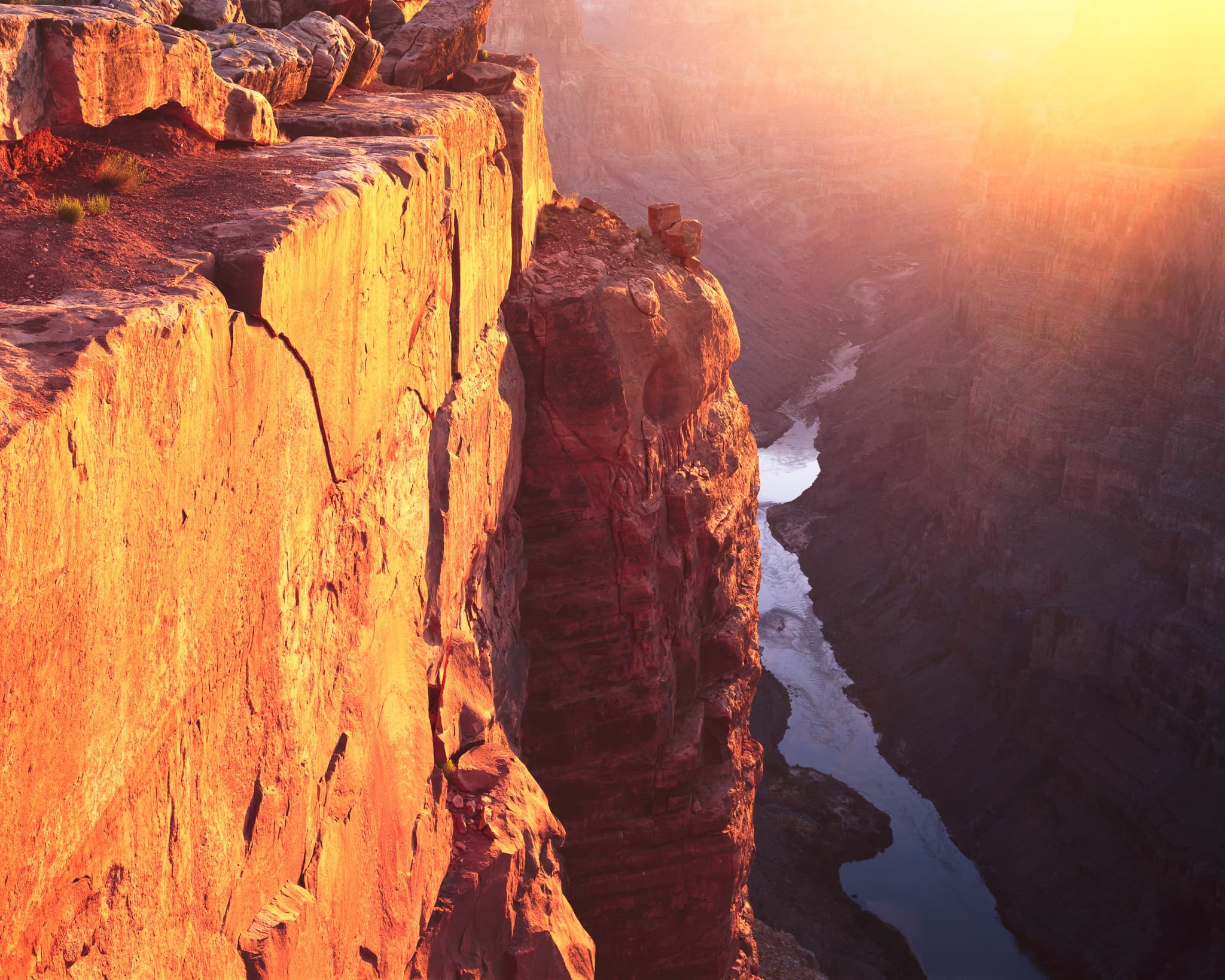
Grand Canyon Photography Guide: Best Spots, Light & Timing
The famous south rim overlooks are worth making. But the Grand Canyon images I keep coming back to came from a remote western overlook that requires 60 miles of unpaved road to reach — and from the North Rim in October, when the crowds are gone and the canyon light gets serious.
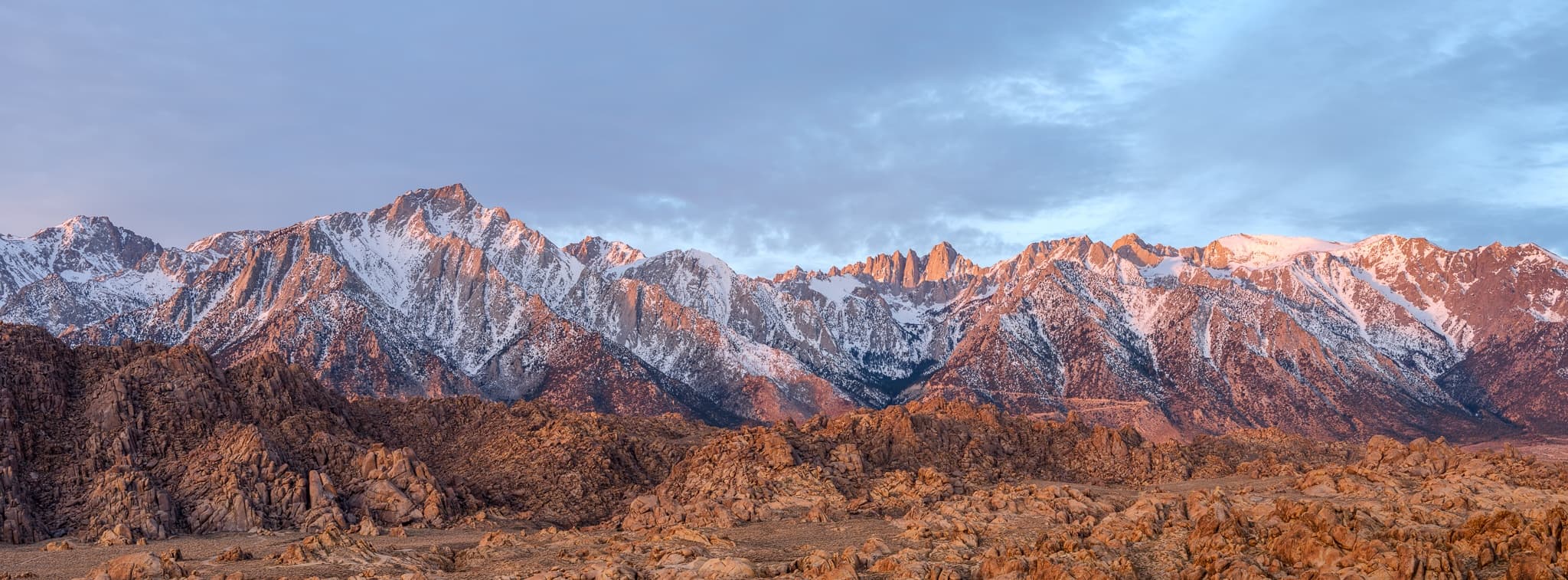
Best Places to Photograph Snow-Covered Mountains in Winter
Winter transforms mountain landscapes in ways no other season can. Where to go, when to go, and what to expect — from Yosemite's granite walls under fresh snow to Zion's red canyon in a storm.
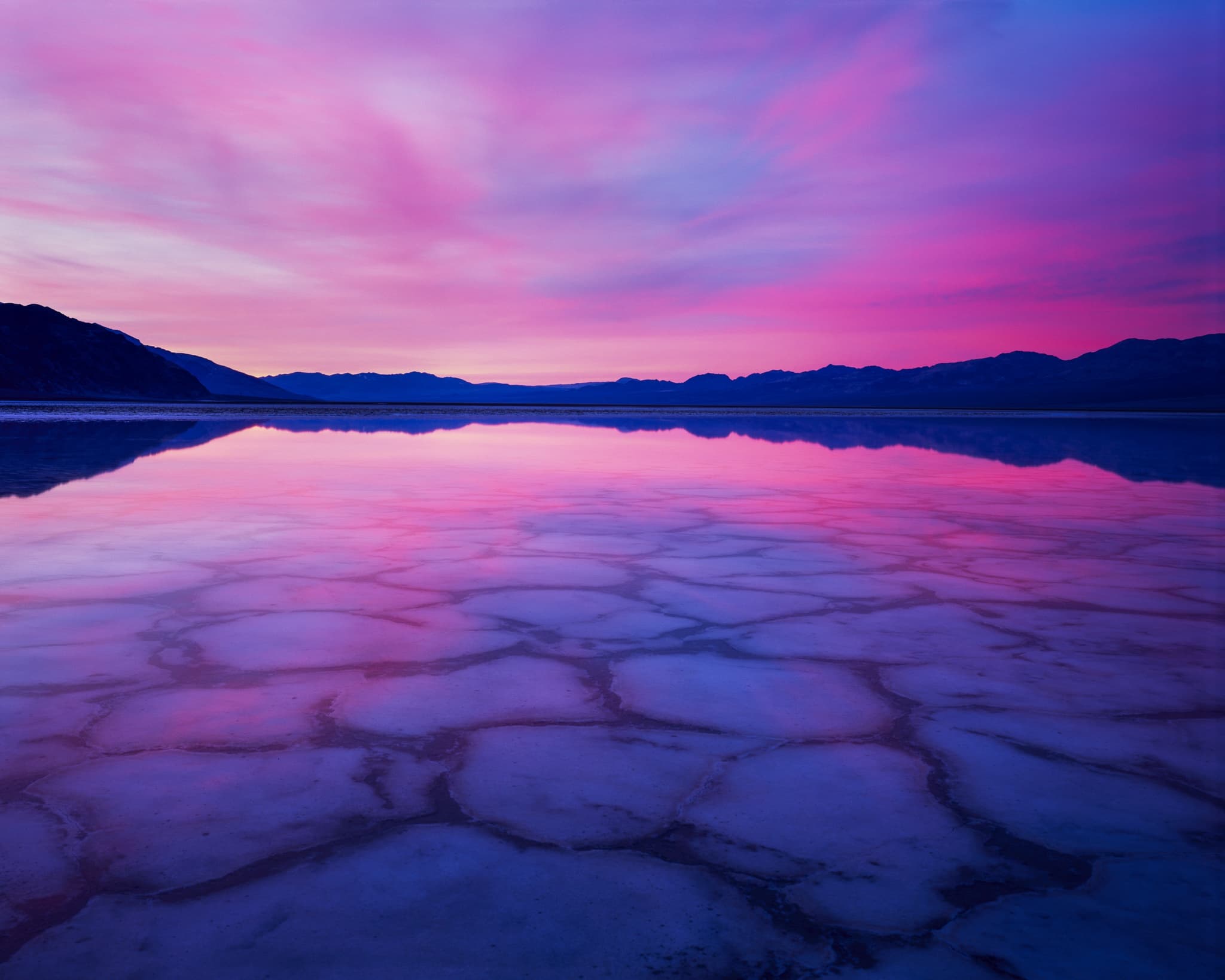
Analog Landscape Photography: Why Film Still Makes Sense in 2026
Most photographers who've tried 4x5 large format film don't go back to digital for their serious landscape work. Here's the honest case for shooting analog in an era when you have no practical reason to.
Tags
Marty Quinn
Large format film photographer based in Phoenix, Arizona. Shoots on 4x5 Arca-Swiss view cameras across the American Southwest — Utah, Arizona, Death Valley, and the Colorado mountains. 25+ years behind the lens. Published in Outdoor Photographer magazine (The Last Frame, June 2008). About Marty →