
Photography Location Guide
Zion National Park Photography Guide
Utah's most dramatic canyon landscape. Towering sandstone cliffs, slot canyons, and the legendary Narrows—everything you need to capture Zion's grandeur.
By Marty Quinn • Updated December 2025
2,000 ft
Canyon Walls Height
Year-Round
Best for Photography
$35
Park Entry Fee
Shuttle
Required Mar-Nov
Overview: Why Zion?
Zion National Park presents some of the most dramatic vertical landscapes in North America. The Virgin River has carved a canyon of staggering proportions—sheer walls of Navajo Sandstone rising 2,000 feet from the canyon floor, painted in shades of red, pink, and cream. Unlike the Grand Canyon's horizontal vastness, Zion is about vertical drama—looking up rather than down.
The park's unique north-south orientation creates distinctive lighting conditions. The canyon walls receive direct sunlight only at specific times, and the narrow passages create unique challenges and opportunities for photographers. Understanding how light moves through Zion's canyons is essential to successful photography here.
I've photographed Zion across seasons for over two decades. Each visit reveals different character—autumn's cottonwoods blazing gold against red cliffs, winter's snow-dusted peaks, spring's waterfalls fed by snowmelt, summer's dramatic monsoon storms. The park rewards repeat visits and patience. Those who learn to read Zion's light create images that capture its true grandeur.
Best Times to Photograph Zion
Time of Day
Sunrise: The eastern canyon walls catch first light, glowing intensely while the valley floor remains in shadow. The Watchman from Canyon Junction Bridge and the Towers of the Virgin from the Pa'rus Trail are classic sunrise locations. However, the canyon floor itself doesn't receive direct sunrise light—you need elevation or east-facing subjects.
Late Morning/Early Afternoon: Unlike most landscape photography locations, Zion often photographs best during these hours. The high sun penetrates the deep canyon, illuminating walls that remain in shadow at other times. The Canyon Overlook Trail and views from the floor of The Narrows require this midday light.
Sunset: The western canyon walls catch warm evening light. The Court of the Patriarchs, Great White Throne, and Angels Landing glow orange and red. Post-sunset, the canyon often fills with soft, reflected light that's ideal for capturing detail without harsh shadows.
Overcast Days: Don't dismiss cloudy conditions. The soft, even light is perfect for The Narrows, slot canyons, and forest scenes. It reduces the extreme contrast between lit walls and shadowed canyon floor that can challenge sensors on sunny days.
Seasons
Spring (March-May): Waterfalls run strong from snowmelt—the Emerald Pools and Weeping Rock are at their best. Wildflowers appear in lower elevations. Weather can be unpredictable. The Narrows may be closed due to high water.
Summer (June-August): Hot but dramatic. Afternoon monsoons create spectacular cloud formations and occasional double rainbows over the canyon. The Narrows are warm enough to wade comfortably. Crowds are at their peak—arrive early.
Fall (September-November): Many photographers' favorite season. Cottonwoods turn brilliant gold against red cliffs, crowds thin after October, and temperatures are ideal. The combination of fall color and Zion's red rock creates images impossible anywhere else.
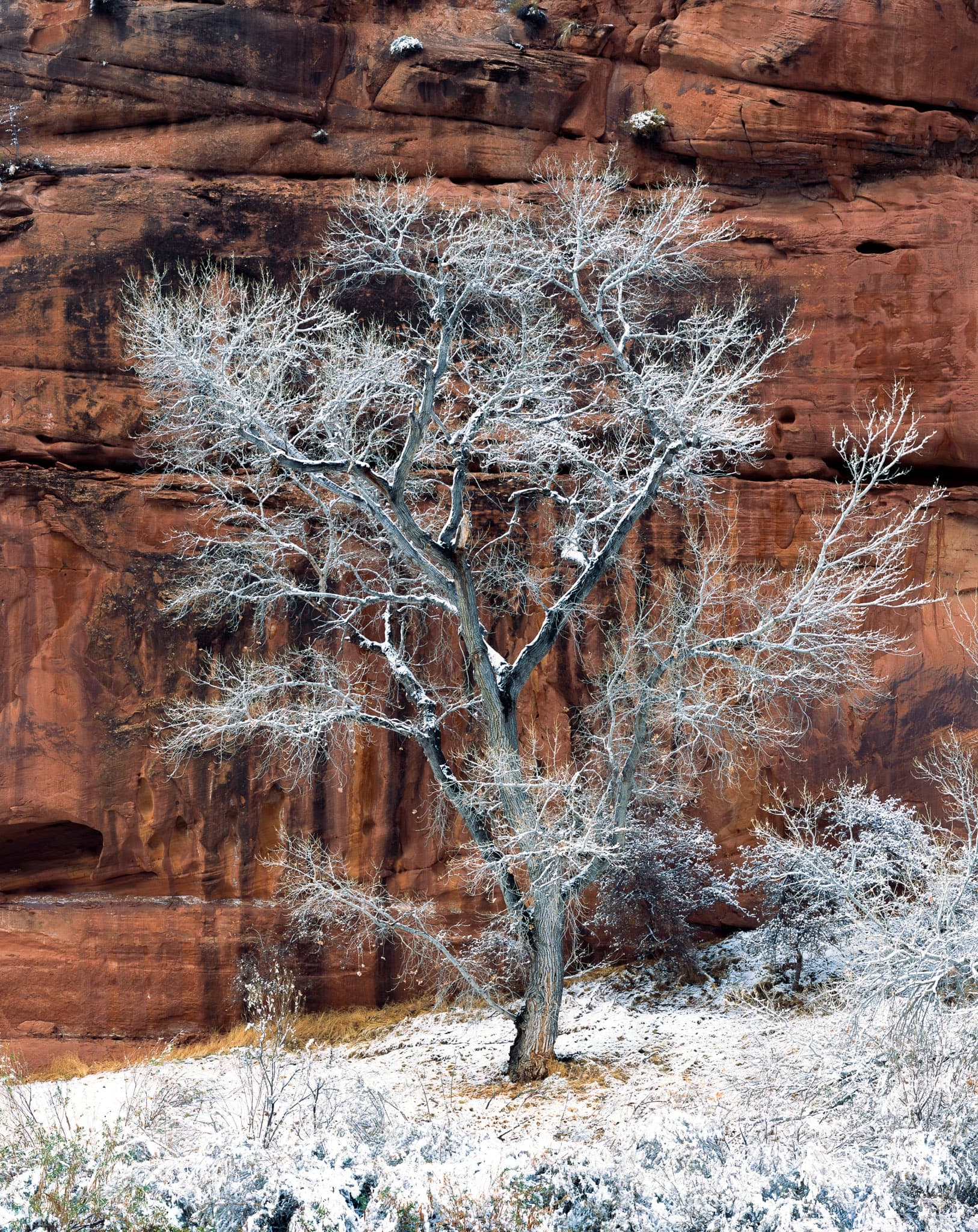
Winter (December-February): Snow dusts the canyon rims and higher elevations while the valley floor often remains clear. Crowds are minimal, and you can drive into the canyon rather than using the shuttle. Cold temperatures require preparation, especially for The Narrows.
Key Viewpoints & Locations
The Narrows
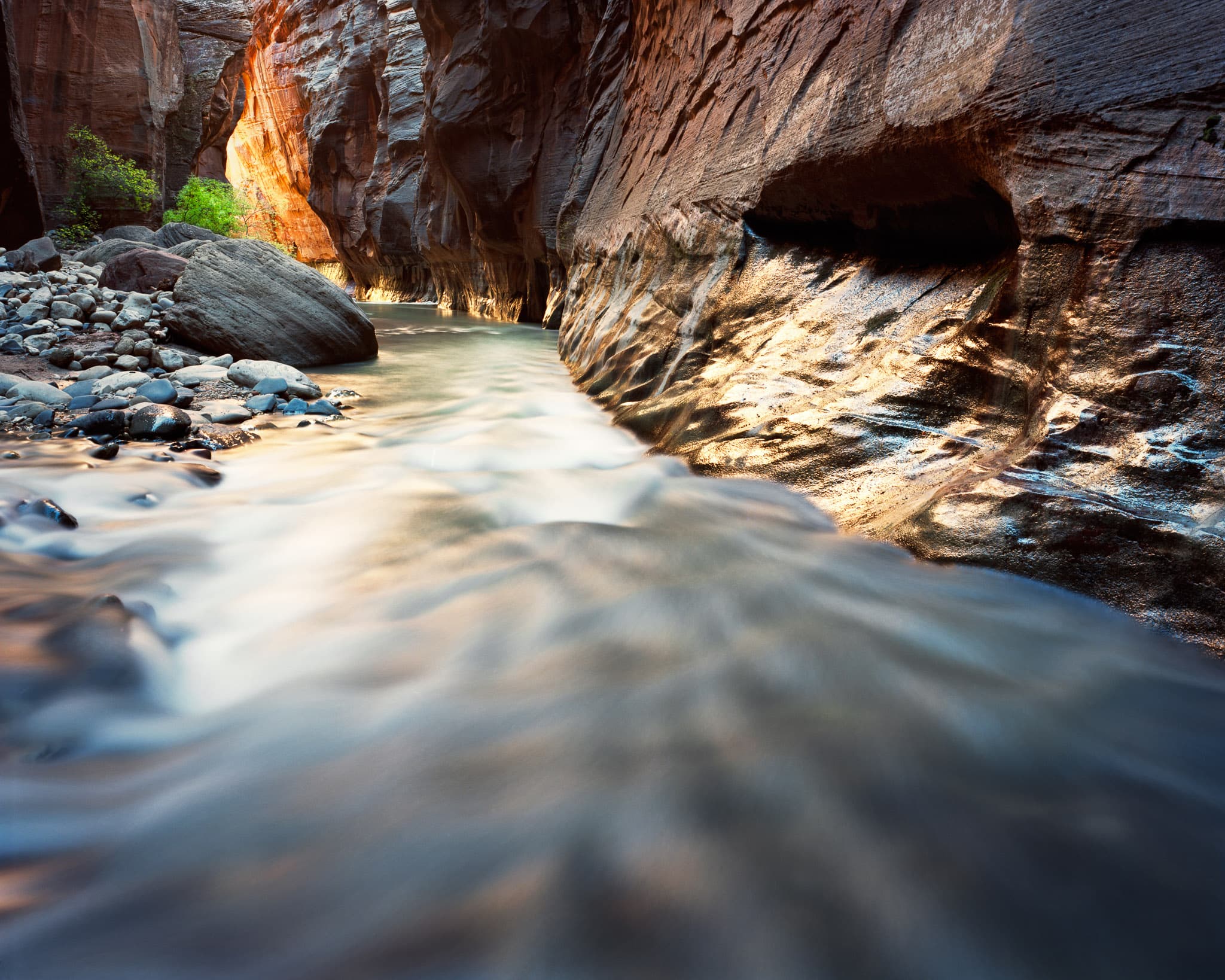
Zion's most famous hike takes you up the Virgin River through a slot canyon with walls towering 1,000 feet overhead. For photographers, The Narrows presents unique challenges: you're wading in water, so waterproof protection for gear is essential. The narrow canyon receives direct light only around midday; at other times, you're working with reflected light bouncing off the walls. This creates beautiful, soft illumination but requires longer exposures. A waterproof bag and careful foot placement are essential—the river bottom is uneven and slippery.
Canyon Overlook Trail
A short (1-mile round trip) but rewarding hike to a dramatic overlook of lower Zion Canyon. The view includes the Towers of the Virgin, West Temple, and the switchbacks of the Zion-Mt. Carmel Highway. Best in morning light when the eastern walls glow. The trail itself passes through interesting terrain with small slot canyons and pine forests.
Court of the Patriarchs
Three massive sandstone peaks—Abraham, Isaac, and Jacob—rising from the canyon floor. The viewpoint is easily accessible from the shuttle stop. Best in late afternoon when the west-facing cliffs catch direct light. A short trail leads to a closer viewpoint with better angles.
The Watchman
Zion's iconic peak, best photographed from the Canyon Junction Bridge on the Pa'rus Trail. Classic compositions include the bridge and Virgin River in the foreground. Best at sunrise when the Watchman catches first light. The Pa'rus Trail offers multiple angles and is one of the few trails open to bicycles.
Angels Landing
The famous (and now permit-required) hike to a narrow rock fin with 1,500-foot drops on either side. For photography, the summit provides 360-degree views of the canyon—spectacular but challenging due to crowds and exposure. The approach via Walter's Wiggles and Scout Lookout offers equally compelling views without the final chains section.
Observation Point
The highest viewpoint in Zion Canyon, 2,148 feet above the valley floor. The view encompasses the entire canyon, including Angels Landing from above. Currently accessible via the East Mesa Trail (the main trail is closed). Worth the effort for serious photographers seeking unique perspectives.
Emerald Pools
A series of pools fed by waterfalls, best in spring when water flow is highest. The Lower Pool is easily accessible; the Upper Pool requires more hiking. The setting—water, vegetation, and red rock—offers something different from the usual canyon views. Overcast days reduce contrast between bright water and shaded rock.
Kolob Canyons
Zion's less-visited northern section offers equally dramatic scenery with far fewer crowds. The Kolob Canyons Viewpoint and Timber Creek Overlook provide panoramic views of finger canyons and towering red cliffs. Best in morning light. The drive alone is worth the trip.
Permits & Access Information
Angels Landing Permits
As of 2022, Angels Landing requires a permit for the final chains section. Permits are available through Recreation.gov via seasonal lottery (applications due months in advance) or day-before lottery. Without a permit, you can still hike to Scout Lookout, which offers excellent views and photography opportunities.
The Narrows Permits
Day hiking The Narrows from the bottom (Riverside Walk) requires no permit. Through-hiking from the top (Chamberlain's Ranch) requires a wilderness permit, available through Recreation.gov. Bottom-up is sufficient for most photography purposes.
Shuttle System
From March through November, private vehicles are prohibited in Zion Canyon. You must use the free shuttle, which runs every 5-15 minutes. The shuttle runs from early morning until evening, but check current schedules—first and last runs are critical for sunrise/sunset photography. In winter, you can drive your own vehicle into the canyon.
Commercial Photography
Commercial photography requires a permit from the National Park Service. Personal photography, including fine art intended for sale, generally doesn't require permits for individuals, but verify current policies with the park.
Equipment Recommendations
Camera & Lenses
Wide angle (14-24mm equivalent): Essential for capturing the towering canyon walls. In The Narrows and slot canyons, ultra-wide is almost mandatory—the walls rise immediately above you.
Standard zoom (24-70mm equivalent): Versatile for most canyon views and isolating specific formations like the Court of the Patriarchs.
Telephoto (70-200mm or longer): Useful for compressing distant peaks and capturing details in the canyon walls. Essential for wildlife (mule deer, California condors).
For The Narrows
Waterproof protection: Essential. Options include dry bags, waterproof camera cases, or simply a camera you're willing to risk. Water levels can rise quickly. Neoprene socks and canyoneering shoes: Available for rent in Springdale—the cold water and slippery rocks require proper footwear. Walking stick: Helps with stability and can serve as a monopod.
Tripod
Essential for The Narrows (low light, longer exposures) and sunrise/sunset work. In The Narrows, you'll want one that can get wet and be cleaned easily—sand and grit will get into everything.
Filters
Polarizer: Reduces reflections on wet rock and water, deepens blue skies. Particularly useful in The Narrows. ND filters: Allow longer exposures for silky water effects in streams and waterfalls.
Photography Techniques
Managing Extreme Contrast
Zion's deep canyons create extreme contrast between sunlit walls and shadowed canyon floor. This often exceeds camera dynamic range. Solutions include: shooting during soft light (early morning, late afternoon, overcast), exposing for highlights and recovering shadows in post, bracketing for HDR, and using graduated ND filters where the contrast line is relatively straight.
Capturing Scale
The canyon walls are so massive they can appear flat in photographs. Include elements that provide scale—people on trails, the shuttle on the road, cottonwood trees along the river. Ultra-wide angles exaggerate the height of the walls but can make them appear to lean; correct in post if needed.
The Narrows Techniques
The narrow canyon and towering walls create unique conditions. Use ISO higher than you normally would—the light is dimmer than it appears to your eyes. Focus on the reflected light on the walls rather than fighting for direct sun. The colorful wall reflections on the water can create abstract images. Protect your camera but be prepared to work quickly when light changes.
Waterfall Photography
Zion's waterfalls (Emerald Pools, Weeping Rock, seasonal falls throughout the canyon) work best in spring when water flow is strong. Use ND filters for silky water effects. Overcast days reduce contrast. Protect your lens from spray—a lens cloth is essential.
Trip Planning & Logistics
Getting There
Zion is located in southwestern Utah, approximately 2.5 hours from Las Vegas, 4.5 hours from Salt Lake City, and 5 hours from Phoenix. The town of Springdale sits at the park's south entrance and serves as the primary base for visitors. The scenic drive through the Zion-Mt. Carmel Tunnel from the east entrance is spectacular but check vehicle size restrictions.
Accommodations
Zion Lodge: The only lodging inside the park. Historic cabins and hotel rooms with unbeatable location. Book months in advance.
Springdale: Numerous hotels, B&Bs, and vacation rentals within walking distance of the park entrance. The Cliffrose and Desert Pearl Inn are photographer favorites for their locations and views.
Camping: Watchman Campground (reservations required) and South Campground (first-come, first-served) offer sites within the park. Camping allows early access before shuttles start.
Hurricane/St. George: More affordable options 30-45 minutes away. Practical if Springdale is booked.
How Long to Stay
Minimum two full days to cover the main viewpoints and The Narrows. Three to four days allows for deeper exploration, weather contingency, and repeat visits to locations under different light. Add time if you want to hike Angels Landing or Observation Point.
Combining with Other Parks
Zion combines well with other Utah parks. Bryce Canyon is 1.5 hours northeast; Capitol Reef is 3 hours; Grand Staircase-Escalante lies between. A week-long Utah parks trip can include Zion, Bryce, Capitol Reef, and Canyonlands/Arches. Snow Canyon State Park near St. George offers excellent photography with far fewer crowds.
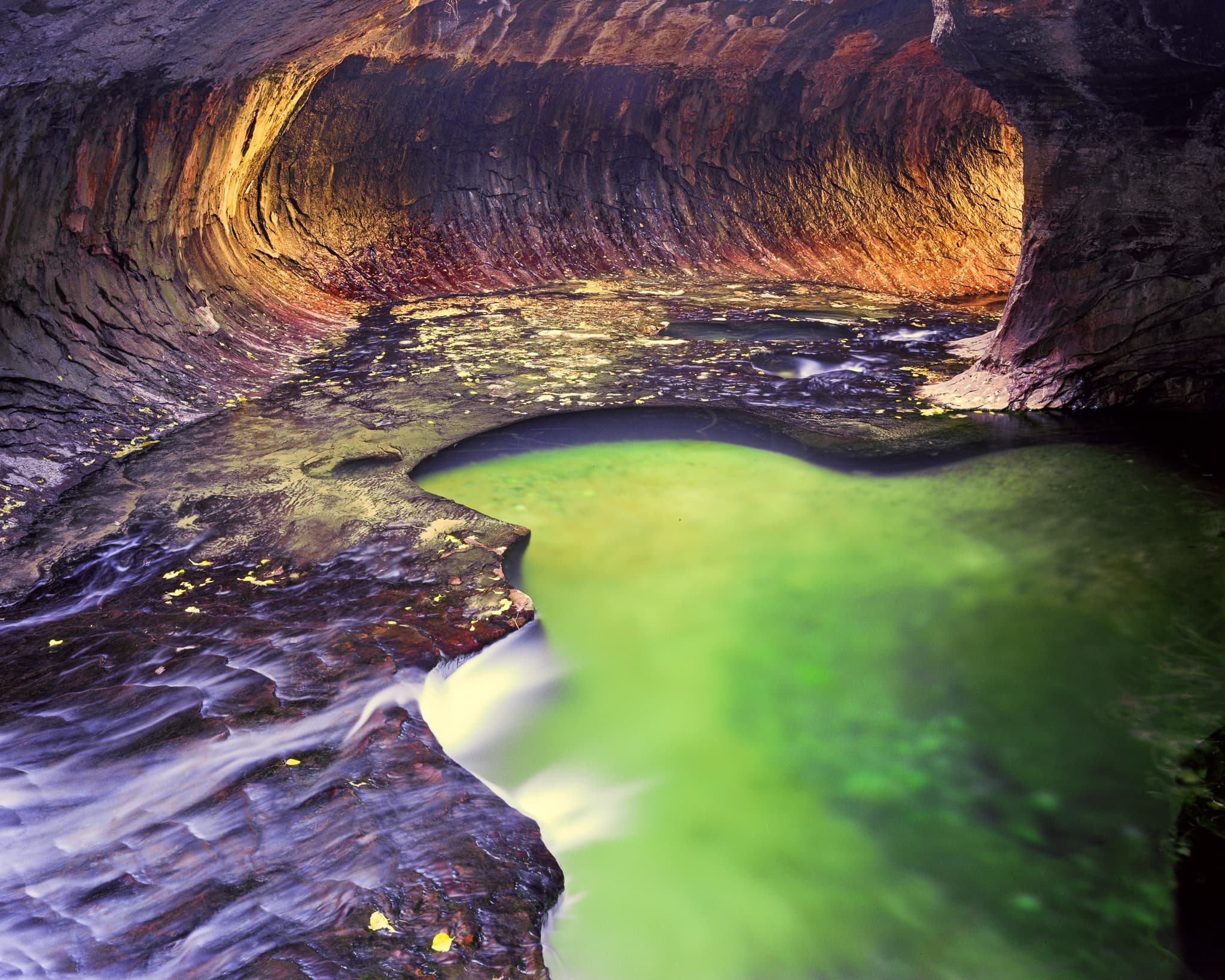
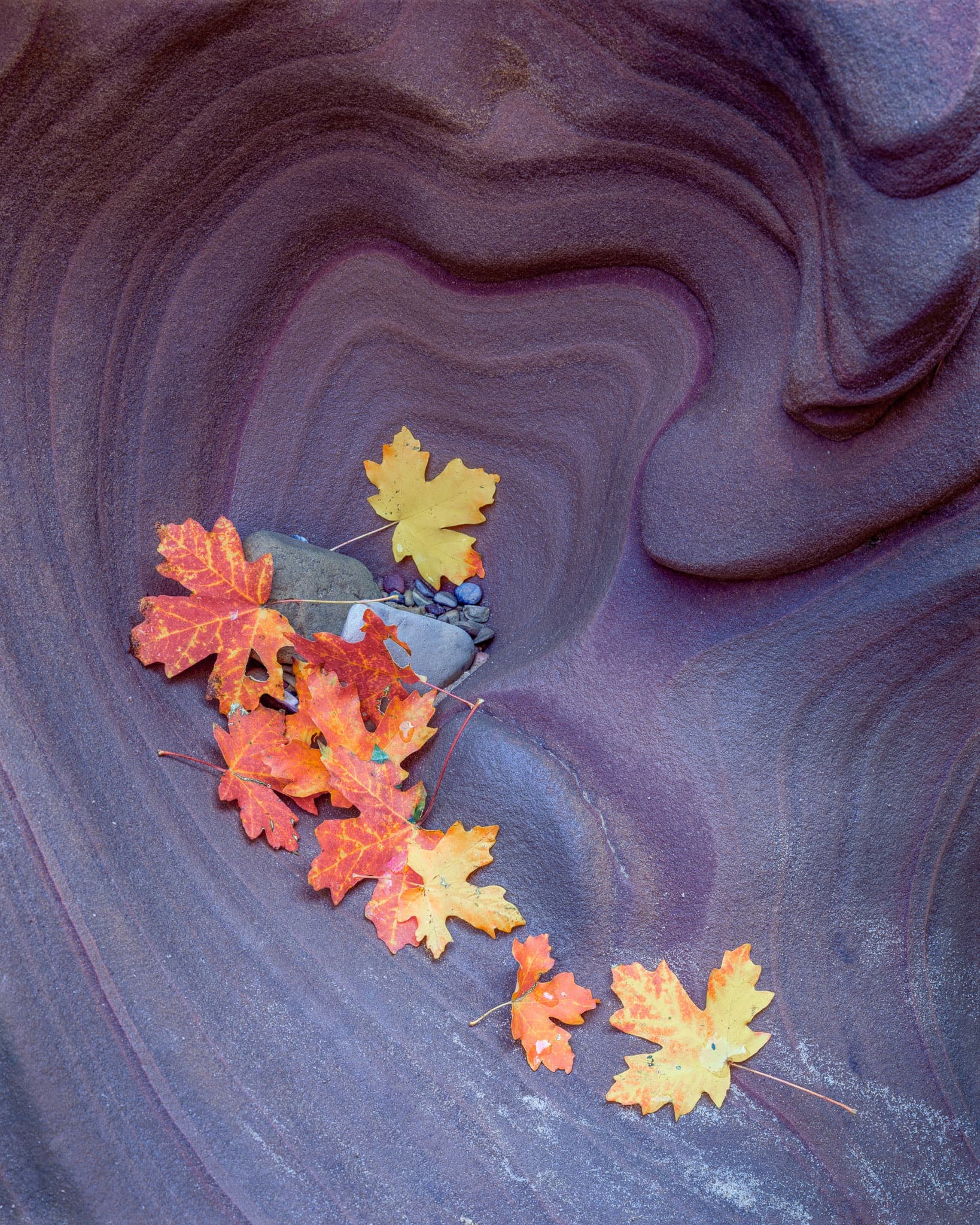
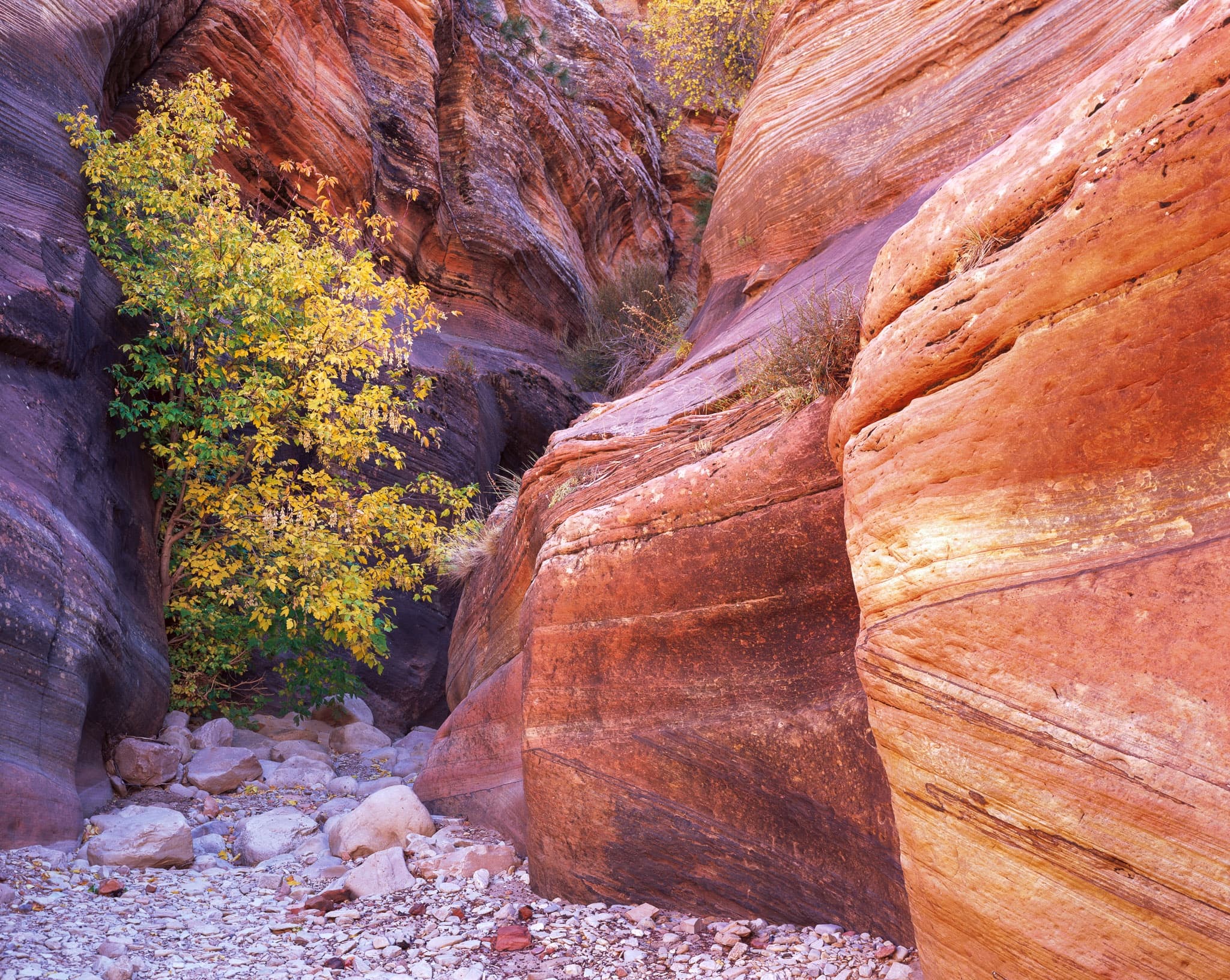
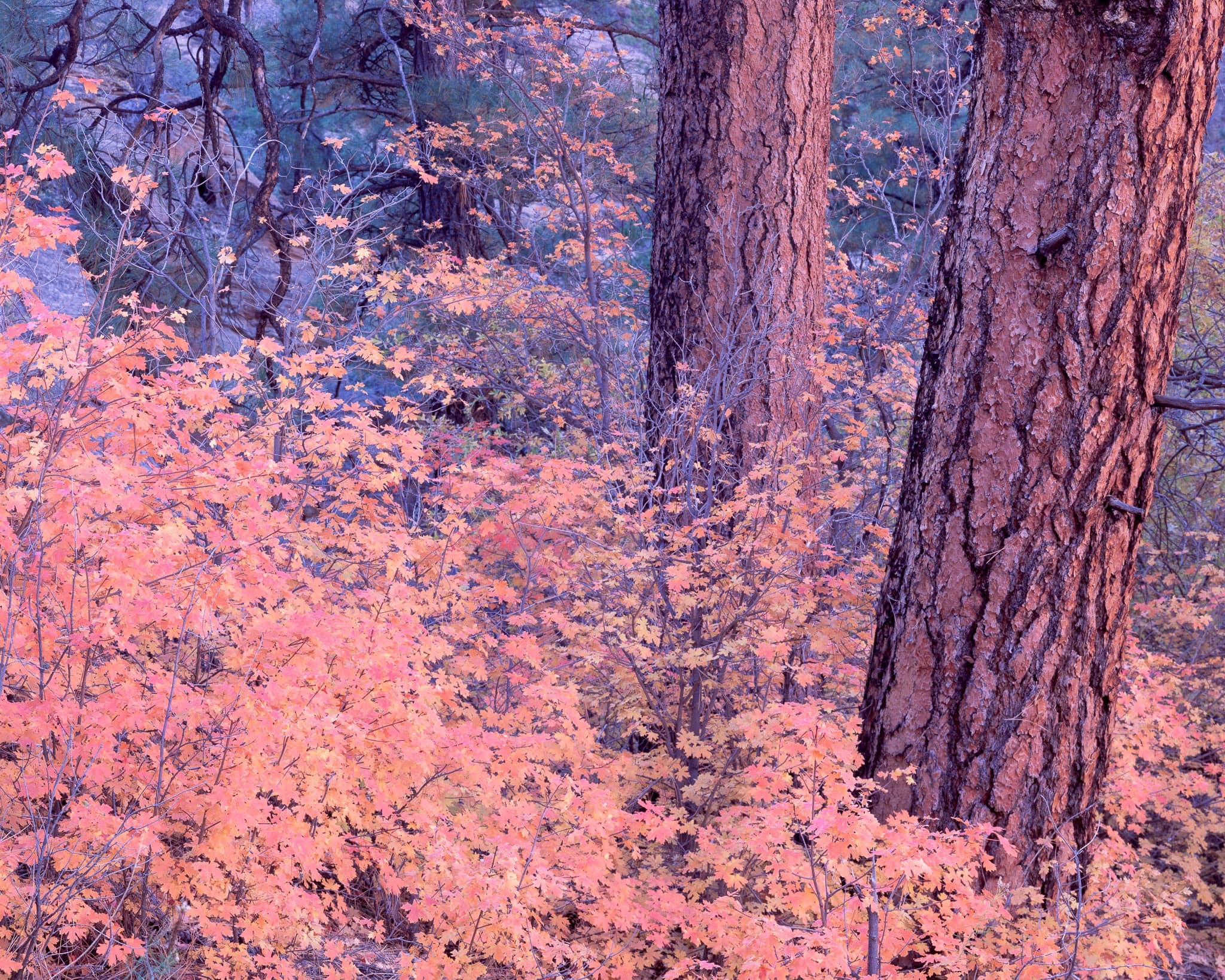
Zion Fine Art Prints
Museum-quality prints from decades of photographing Zion National Park. Each image captures a specific moment in this extraordinary canyon landscape.
Explore Related Galleries
Zion is one of Utah's "Mighty Five" national parks. Explore more of Utah's red rock country.
Frequently Asked Questions
What is the best time of year to photograph Zion?
Fall (September-November) offers ideal temperatures, fall color, and reduced crowds. Spring brings waterfalls and wildflowers. Winter has snow-dusted peaks and the ability to drive into the canyon. Summer has dramatic monsoon skies but crowds and heat.
Do I need a permit to photograph in Zion?
Personal photography requires no permit. Angels Landing requires a permit for the chains section. Commercial photography requires a permit from NPS. The Narrows (bottom-up) requires no permit for day hiking.
How do I photograph The Narrows?
You'll be wading in the Virgin River, so waterproof protection for your camera is essential. Rent neoprene socks and canyoneering shoes in Springdale. A walking stick helps with stability. The best light is around midday when sun penetrates the narrow canyon. Use a tripod for longer exposures.
When is The Narrows closed?
The Narrows closes during flash flood warnings and when the Virgin River flow exceeds 150 cubic feet per second. Spring snowmelt and summer monsoons can cause closures. Check current conditions at the visitor center or on the park website before planning your hike.
What lens is best for Zion photography?
Ultra-wide angle (14-24mm) is essential for the towering canyon walls, especially in The Narrows. A standard zoom (24-70mm) covers most other situations. Telephoto (70-200mm) helps for isolating distant formations and wildlife.
How does the shuttle system work for photographers?
From March through November, private vehicles are banned in Zion Canyon. Free shuttles run every 5-15 minutes from the visitor center. First shuttles depart early morning, but check schedules as they vary by season. In winter, you can drive your own vehicle into the canyon.
Bring Zion Home
Museum-quality prints capturing the dramatic beauty of Zion's towering canyon walls. Each print is individually produced and includes a certificate of authenticity.