
Photography Location Guide
Monument Valley Photography Guide
Everything you need to photograph one of America's most iconic landscapes. Viewpoints, timing, permits, and techniques from 25+ years of experience.
By Marty Quinn • Updated December 2025
Sunrise
Best for East Mittens
Sunset
Best for West Mittens
$20
Park Entry Fee
Year-Round
Access Available
Overview: Why Monument Valley?
Monument Valley Navajo Tribal Park straddles the Arizona-Utah border on Navajo Nation land. Those massive sandstone buttes—the Mittens, Merrick Butte, the Three Sisters—have appeared in countless films, advertisements, and photographs. They're icons of the American West, immediately recognizable worldwide.
But photographs can't prepare you for the scale. The buttes rise 400 to 1,000 feet from the valley floor, set against a landscape that extends to distant mesas and infinite sky. The red-orange sandstone changes color throughout the day—pale pink at dawn, deep rust at midday, fiery orange at sunset, purple at twilight.
I've photographed Monument Valley over 50 times in 25+ years, in every season and every type of light. The location continues to reward return visits. Familiar compositions reveal new possibilities as light and weather shift. There's a reason it draws photographers from around the world—and a reason the best keep coming back.
Best Times to Photograph Monument Valley
Time of Day
Sunrise (Best for East-facing compositions): The classic view from the visitor center looks west toward the Mittens. At sunrise, the buttes catch direct light while the foreground remains in shadow—dramatic but challenging exposure-wise. The formations glow orange-gold as the sun clears the eastern mesa.
Sunset (Best for West-facing compositions): Golden hour transforms the valley. The low angle creates long shadows that add depth and dimension. The Mittens, Three Sisters, and other formations take on progressively warmer tones as the sun descends. Post-sunset afterglow often provides the most saturated colors.
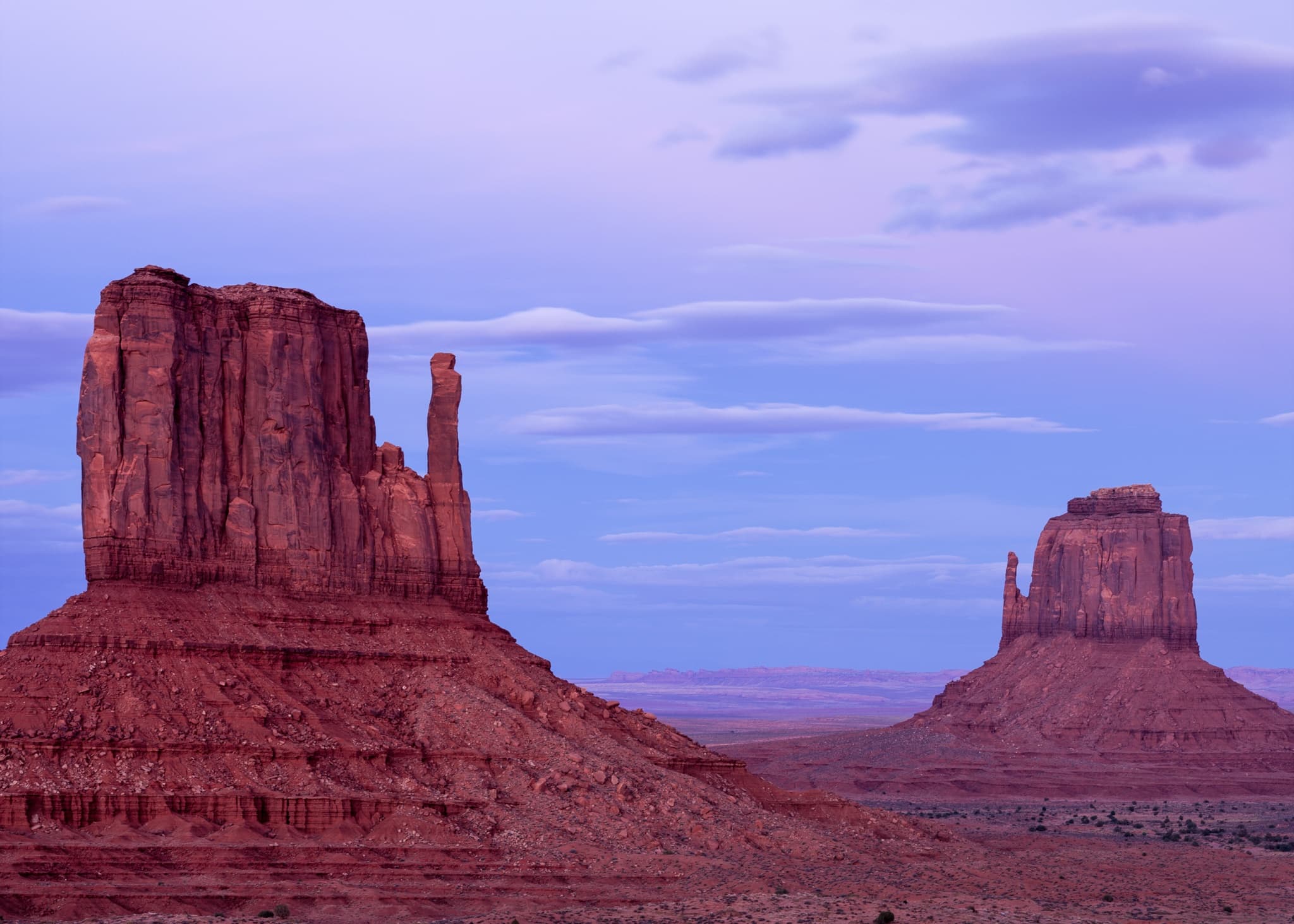
Blue Hour: Don't pack up immediately after sunset. The 20-30 minutes after the sun drops below the horizon often produce extraordinary color—deep blues in the sky contrasting with the warm tones still reflecting off the sandstone.
Midday: Generally avoided by landscape photographers due to harsh overhead light. However, midday works for certain subjects—particularly the valley floor's textures, interior rock formations, and any compositions where you want minimal shadows.
Seasons
Spring (March-May): Comfortable temperatures, occasional wildflowers, dramatic cloud buildups. Wind can be challenging—bring dust protection for your equipment.
Summer (June-August): Hot during midday but extraordinary monsoon potential. Afternoon thunderstorms create dramatic skies, lightning opportunities, and clearing storm light. Best avoided unless you specifically want monsoon conditions.
Fall (September-November): Many photographers' favorite season. Comfortable temperatures, clear skies, excellent visibility. Late fall can bring snow to the distant mountains, adding depth to compositions.
Winter (December-February): Cold but rewarding. Snow on the formations creates extraordinary contrast. Fewer tourists mean easier access to viewpoints. The low sun angle provides dramatic side-lighting throughout the day.
Key Viewpoints & Locations
Visitor Center Overlook
The iconic view. You've seen it in every Western film and tourism advertisement. The overlook provides an elevated perspective of East Mitten, West Mitten, and Merrick Butte. It's popular for good reason—the composition is extraordinary. Arrive early for sunrise to secure your spot. The view faces west, so sunrise backlights the formations while sunset provides front-lighting.
Valley Drive (17-Mile Loop)
The unpaved scenic drive loops through the valley floor, passing numbered viewpoints. Elephant Butte, Three Sisters, John Ford Point, Artist's Point, and North Window all offer distinct perspectives. The road is rough but passable in most vehicles (check conditions if recent rain). Plan 2-3 hours minimum, longer if you're stopping to photograph seriously.
John Ford Point
Named for the director who filmed multiple Westerns here. The overlook provides sweeping views of the valley with Sentinel Mesa in the distance. Navajo vendors often offer photo opportunities with horses—which can add a sense of scale to your compositions.
Artist's Point
Offers views back toward the Mittens from within the valley. This perspective emphasizes the formations' height relative to the valley floor. Less crowded than the visitor center overlook.
North Window
A natural rock frame around a view of the Mittens. Requires positioning to get the "window" effect, but creates a distinctive composition when executed well. Best in morning light.
Backcountry Areas (Guide Required)
Certain areas—including Teardrop Arch, Mystery Valley, and Hunts Mesa—require a Navajo guide. These locations offer perspectives unavailable from the main loop and are worth the additional cost for serious photographers. Hunts Mesa in particular provides an elevated, panoramic view of the entire valley.
Permits & Access Information
Basic Entry
Monument Valley Navajo Tribal Park charges $10 per person, per day, plus $15 per vehicle for the Scenic Drive. The America the Beautiful national park pass is not accepted — this is tribal land, not a national park. The fee covers the visitor center, overlook, and the 17-mile Valley Drive. Navajo Parks & Recreation requires a Film/Photography or Special Use Permit for photography at tribal park locations; costs are quoted per request rather than published, so call (928) 871-6647 ahead of your trip.
Commercial Photography
Commercial photography requires a permit from the Navajo Nation. This includes photography intended for sale, advertising, or publication. Fine art photography for gallery sale falls into a gray area—I recommend contacting the park office directly if you plan to sell images commercially.
Drone Photography
Drones are prohibited within Monument Valley Navajo Tribal Park without special permission. The Navajo Nation has strict regulations about aerial photography on tribal land.
Backcountry Access
Leaving the main Valley Drive requires a Navajo guide. This isn't optional—it's both a park regulation and a matter of respecting tribal land. Guides can be arranged through the visitor center or booked in advance through tour operators. For serious photography, I recommend booking a private photography-focused tour rather than a general sightseeing tour.
Hours of Operation
The park opens at 6:00 AM May through September, 8:00 AM October through April. It closes at 8:00 PM in summer, sunset in winter. The visitor center closes earlier. Plan accordingly for sunrise/sunset photography—you may need to be inside the park before official opening during certain seasons.
Equipment Recommendations
Camera & Lenses
Any camera capable of capturing good dynamic range will work here. The extreme contrast between sky and shadow challenges sensors, so cameras with good highlight/shadow recovery are advantageous.
Wide angle (16-35mm equivalent): Essential for capturing the scale of the formations against big skies. Most iconic Monument Valley shots use wide angles.
Standard zoom (24-70mm equivalent): Versatile for isolating specific formations or compressing perspective.
Telephoto (70-200mm or longer): Useful for compressing distant formations, isolating details, and capturing the buttes from viewpoints on the Valley Drive.
Tripod
Essential for sunrise, sunset, and blue hour work. The wind can be significant, so bring a sturdy tripod and consider hanging weight from the center column. A tripod also encourages more deliberate composition.
Filters
Polarizer: Deepens blue skies, reduces haze, and can enhance the red-orange tones of the sandstone. Most useful in the middle of the day.
Graduated ND: Helpful for balancing bright skies against darker foregrounds, though modern sensors often handle this in post-processing.
Protection
Dust is unavoidable. Bring lens cleaning supplies, consider a rain cover even in dry weather (it keeps dust out), and change lenses carefully. The fine red sand gets everywhere.
Photography Techniques
Exposure Considerations
The contrast between bright sky and shadowed formations can exceed your camera's dynamic range. Bracket exposures for HDR processing, use graduated filters, or expose for the highlights and recover shadows in post. At sunrise/sunset, the formations often need more exposure than the sky—don't let them go too dark.
Composition
The classic visitor center view is classic for a reason—don't skip it just because it's been photographed millions of times. But also explore alternatives. Move left or right to change the relationship between formations. Include foreground elements like desert vegetation or rock. Look for leading lines in the landscape.
The buttes provide strong vertical elements—consider vertical orientations as well as horizontal. Panoramic formats can capture the sweep of the valley effectively.
Working with Light
Side-lighting at sunrise and sunset reveals texture in the sandstone. Front-lighting (sun behind you) saturates colors but flattens forms. Backlight creates dramatic silhouettes but requires careful exposure. Each lighting direction offers different possibilities—don't photograph only in one condition.
Weather Opportunities
Don't pack up when conditions seem "bad." Storm light, when the sun breaks through clouds, creates extraordinary drama. Snow transforms the red landscape into something otherworldly. Even overcast days work for certain compositions, reducing contrast and allowing you to focus on form and texture.
Trip Planning & Logistics
Getting There
Monument Valley is located on US Highway 163, approximately 25 miles north of Kayenta, Arizona. The nearest major airports are Phoenix (5 hours), Las Vegas (6 hours), and Albuquerque (5 hours). The drive itself is scenic, particularly the approach from the south on US 163.
Accommodations
The View Hotel: The only hotel inside the park, with rooms overlooking the valley. Book well in advance—it sells out, especially for rooms with direct butte views. The location can't be beat for sunrise photography.
Goulding's Lodge: Just outside the park with good views. Historic lodge associated with John Ford's Western films.
Kayenta: The nearest town with multiple hotel options. About 25 minutes from the park entrance.
How Long to Stay
Minimum two nights to photograph both sunrise and sunset. Three nights allows for weather contingency and exploring the Valley Drive thoroughly. Serious photographers often return multiple times per year to capture different seasons and conditions.
Nearby Attractions
Monument Valley combines well with other Four Corners destinations: Antelope Canyon (2 hours), Horseshoe Bend (2.5 hours), Valley of the Gods (45 minutes), Mexican Hat (30 minutes), and Natural Bridges National Monument (2 hours). A week-long trip can cover significant ground.
Respect for the Land
Monument Valley is on Navajo Nation land. Respect posted areas, stay on designated roads and trails, don't photograph residents without permission, and remember that you're a guest on tribal land. Purchase from local vendors when possible—tourism is important to the local economy.
Monument Valley Fine Art Prints
Museum-quality prints from decades of photographing Monument Valley. Each image captures a specific moment of light and atmosphere in this extraordinary landscape.
Explore Related Galleries
Monument Valley spans the Arizona-Utah border. Explore prints from both states.
Frequently Asked Questions
What is the best time of year to photograph Monument Valley?
Fall (September-November) offers the best combination of comfortable temperatures, clear skies, and good light. Spring is also excellent. Winter provides unique opportunities with potential snow. Summer brings dramatic monsoon skies but extreme heat.
Do I need a permit to photograph Monument Valley?
Personal photography requires only the standard park entry fee ($20/vehicle). Commercial photography requires a permit from the Navajo Nation. Backcountry areas require a Navajo guide regardless of photography intent.
Can I fly a drone at Monument Valley?
No. Drone use is prohibited in Monument Valley Navajo Tribal Park without special permission from the Navajo Nation, which is rarely granted.
What lens focal length is best for Monument Valley?
Wide angle (16-35mm equivalent) is most useful for capturing the iconic views with big skies. A standard zoom (24-70mm) offers versatility. Telephoto lenses (70-200mm+) are valuable for isolating individual formations and compressing distant elements.
Is The View Hotel worth the cost?
For serious photographers, yes. Being inside the park allows you to photograph sunrise without rushing through the entrance gate. The balcony views provide unique perspectives unavailable elsewhere. Book well in advance—it sells out.
How do I get to the backcountry areas like Hunts Mesa?
Backcountry areas require a Navajo guide—this is mandatory, not optional. Tours can be arranged through the visitor center or booked in advance with local operators. For photography, book a private tour that allows flexibility for light conditions.
Bring Monument Valley Home
Museum-quality prints capturing the majesty of these iconic formations. Each print is individually produced and includes a certificate of authenticity.