
Monument Valley Mitten Shadow: Dates, Locations & Tips
Twice a year — around the spring and fall equinoxes — the setting sun aligns with Monument Valley's West Mitten Butte so its shadow falls directly onto the East Mitten. The window is about 15 minutes. Here's how to plan for it, where to position yourself, and what happened when I shot it in clouds.
Fine Art Prints
Monument Valley photographs — the Mittens, Merrick Butte, and Agathla Peak. Limited edition fine art prints.
What the Mitten Shadow Event Actually Is
Twice a year, in mid-March and again in mid-September, the sun sets at an angle that causes the West Mitten Butte to cast its shadow directly onto the face of the East Mitten. The two formations stand roughly 300-400 feet apart, and the 400-foot West Mitten throws a shadow long enough to reach its neighbor only during a few days around each equinox. The alignment window lasts around 15 minutes before the sun drops below the horizon entirely.
It sounds like the kind of thing that would be hard to verify from a photograph — a shadow on a rock formation isn't exactly a solar eclipse. But in person, when the geometry lines up and the shadow climbs the face of the East Mitten, it's genuinely striking. The valley floor goes dark in the foreground while the lit portions of the Mittens and Merrick Butte continue to glow, and for a few minutes the entire composition shifts.
When It Happens
The event tracks with the equinoxes but isn't on them exactly. The spring occurrence falls in the days surrounding March 20-21, and the fall occurrence around September 22-23. The shadow alignment appears roughly 15-25 minutes before sunset — check a sunset calculator for Page, Arizona or Kayenta on your target dates, then work backward. Monument Valley sits at a higher elevation than those towns, so sunset arrives a few minutes later than the calculator suggests.
Clear skies maximize shadow contrast. Partly cloudy conditions diffuse the shadow edges but aren't a complete loss — more on that below. Overcast is a washout. Check the forecast three to four days out when you're still close enough to plan but far enough to adjust if needed.
Park hours matter. Monument Valley Tribal Park is open 6 AM to 8 PM from May through September, and 8 AM to 4:30 PM from October through April. The spring event in March falls within those October-April hours, meaning the park closes around the same time the shadow event is peaking. Arrive well before closing and confirm current hours with the park before you go — the 4:30 PM close has caught people off guard.
Where to Position Yourself
Most photographs of this event are shot from the standard Visitor Center overlook, with the Mittens positioned close together in the frame. It's a legitimate composition and the most reliable place to see the alignment clearly. The overlook has a direct east-west sightline across both formations, which is exactly the geometry the shadow needs to read in the frame.
For my shoot, I drove the 17-mile valley loop to find something different. I was looking for a position that widened the scene to include Merrick Butte, giving the Mittens some breathing room in the frame and showing the shadow's path across the valley floor rather than just the endpoint on the East Mitten face. The elevated vantage point I settled on added foreground depth and let me shoot slightly across the valley rather than straight into the formations.
A few notes on the loop road: sections are unpaved and can be rough after rain. High clearance isn't strictly required for the main loop, but it helps. Allow at least two hours to drive and scout before your target time — Monument Valley covers a lot of ground and distances between stops are longer than they look on the map.
Shooting in Clouds: What Actually Happened
My March shoot had a partly cloudy forecast. The desert Southwest in March is usually clear, but not always, and I'd driven out specifically for this event, so I wasn't leaving early. I arrived at my chosen position several hours before sunset and watched the sun disappear behind a solid cloud bank.
For the next three hours it was on-and-off. The sun would break through for a few minutes, throw dramatic light across the valley, then vanish again. I shot constantly during the clear windows and waited during the gaps. By the time the actual shadow event window arrived, the clouds were still present but the sun was intermittently punching through.
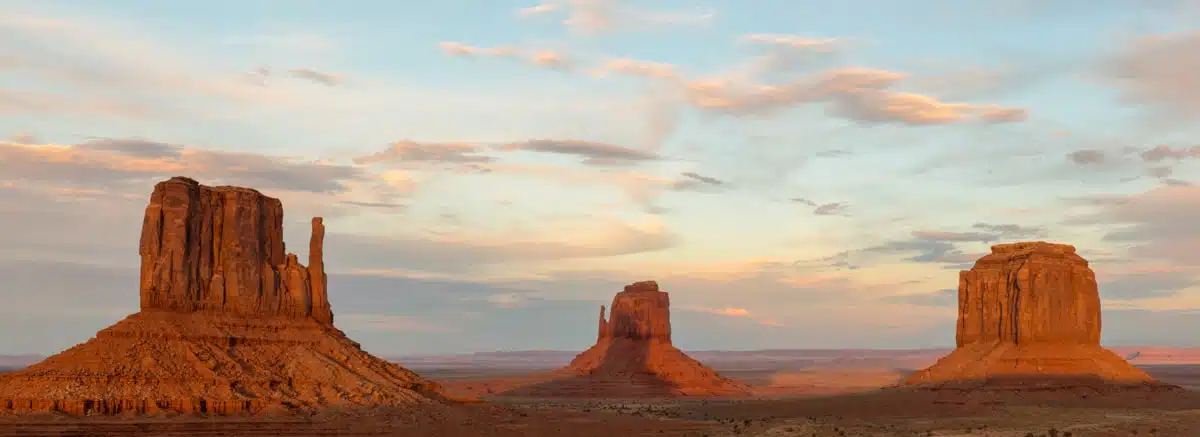
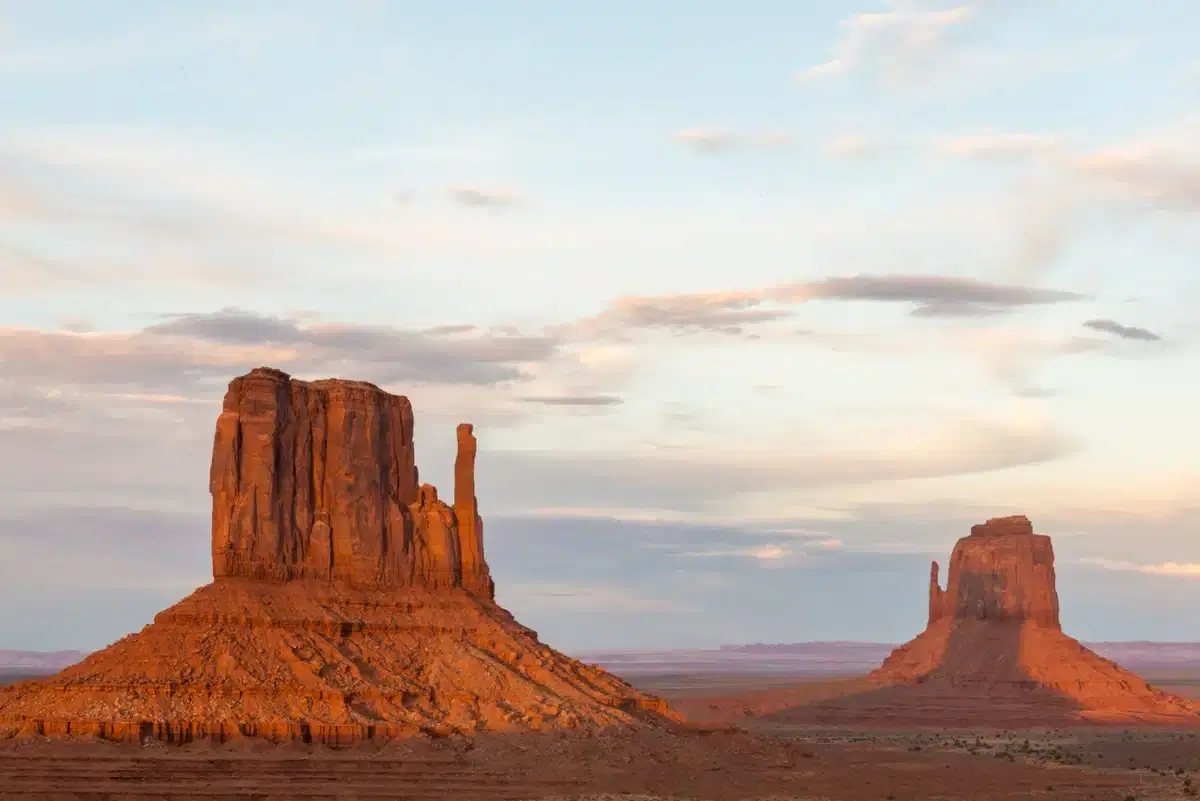
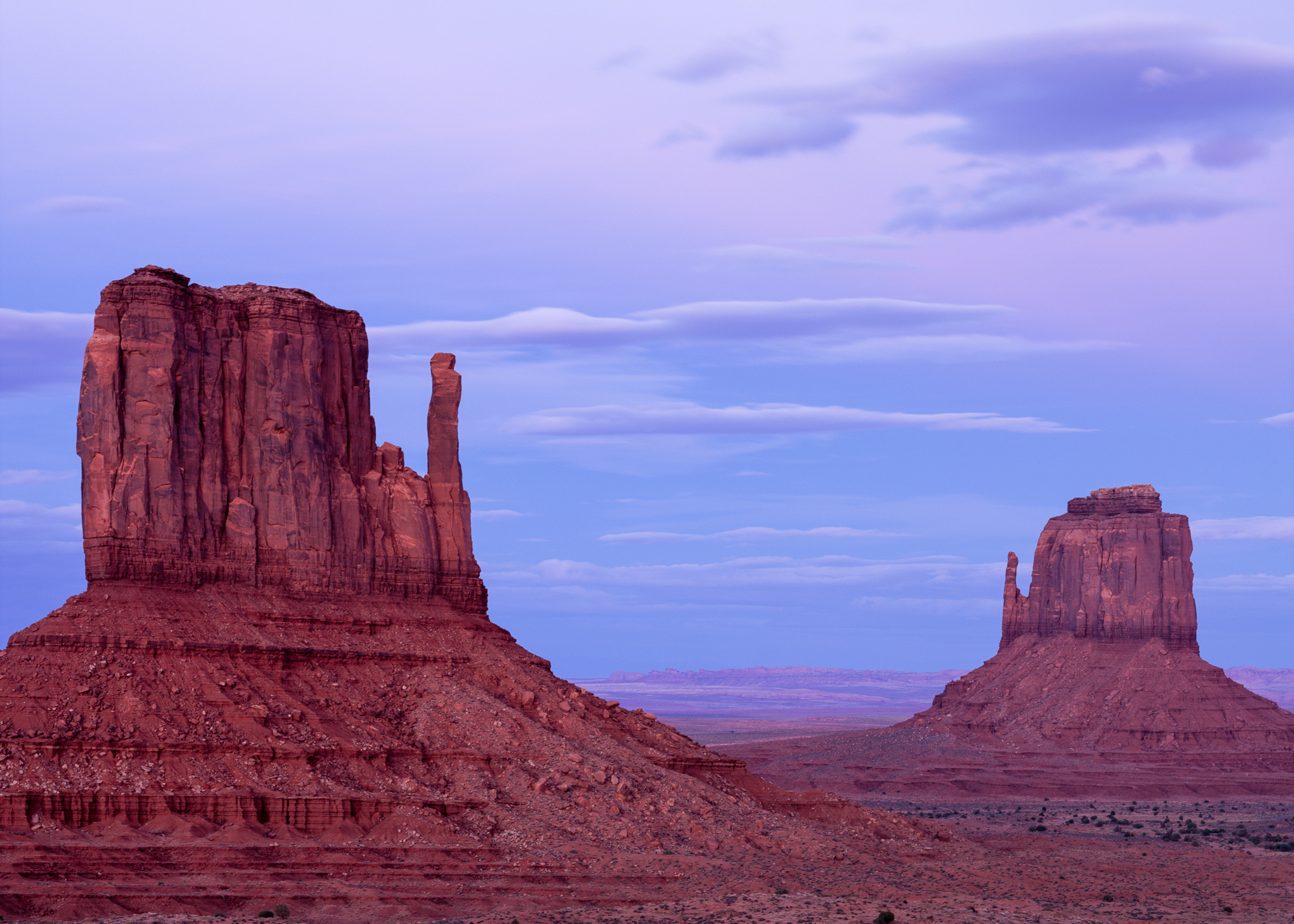
The Mitten Shadow event from a wider position on the valley loop road, with Merrick Butte providing balance on the right. Partial cloud cover softened the shadow edge but added drama to the sky.
The shadow was softer than it would have been under clear skies — the edge less defined, the transition more gradual. What I didn't expect was how the clouds improved other parts of the image. The dramatic sky, the light shafts breaking through during clear windows, the way the warm sunset light seemed more saturated against the stormy background — none of that would have been there on a bluebird day. The images I came away with aren't what I'd originally envisioned, but they're genuinely good.
The lesson: don't cancel because of clouds. Go anyway. The event might not be at its sharpest, but the conditions could push the image somewhere more interesting.
Camera Settings and Technique
The 15-minute window goes fast. Have your composition locked before the event starts — this is not the time to be exploring the valley loop looking for a spot. Set up at least 30 minutes early, confirm your framing, take test exposures, and then wait.
- Expose for the lit formations. As shadows deepen in the foreground, the Mittens will remain lit longer. Metering for the shadows will blow out the sandstone. Spot meter on a mid-tone in the formations or use matrix metering and pull down 1 stop.
- Graduated ND filter. The sky will be significantly brighter than the valley floor. A 2-stop soft-step grad helps hold detail in both. Alternatively, bracket exposures and blend in post.
- Tripod, no exceptions. Light levels drop fast at the end of the event. Exposures that started at 1/250s can be 1/15s by the time you're done. Hand-holding through that transition means soft frames when the light is at its best.
- Shoot continuously through the window. The shadow moves. Frame 1 and Frame 30 will look noticeably different. You want the full progression to choose from in post.
- Large format consideration: I shot both 4x5 film and digital on this trip. The large format images require more setup time between shots, so I used the digital system to document the shadow's movement and the 4x5 for two or three carefully timed compositions at peak alignment. If you're shooting large format only, pre-visualize your two best moments and commit to those rather than trying to cover everything.
Spring vs Fall: Which to Prioritize
The spring event in March and the fall event in September are mirror images of each other in terms of sun angle and shadow direction, but the conditions tend to differ.
March brings unpredictable weather — the lingering chance of storms, cloud buildups, and high desert cold after sundown. The park closes early (4:30 PM in winter hours), which creates timing pressure. But the light in March can be spectacular when conditions cooperate, with a warmth and drama that the clearer fall days don't always match.
September is typically cleaner. The monsoon season ends in August and early September brings clearer skies, lower humidity, and comfortable temperatures. Park hours extend to 8 PM, removing the timing pressure entirely. Crowds are thinner than summer peak. If I had to pick one, September is the more reliable trip.
That said, I've never shot the fall event yet. My March shoot is the reason I'm going back.
Logistics
- Entry fee: $20 per vehicle (up to 4 people) at the Tribal Park gate
- Commercial photography: Requires a separate permit from the Navajo Nation
- Valley Drive: The 17-mile self-guided loop road — allow 2+ hours for scouting
- Nearest accommodation: The View Hotel sits directly at the Visitor Center overlook and books out months in advance around the equinoxes. Kayenta (25 miles south) has more availability.
- Cell service: Minimal. Download offline maps before you arrive.
Monument Valley holds far more than this one event. For a complete picture of what to photograph here and when, my Monument Valley Photography Guide covers the best viewpoints, sunrise and sunset timing, and the full logistics of a multi-day photography visit.
Fine Art Prints
Monument Valley Prints
Large format film photographs from the valley — the buttes, the light, the space. Available as limited edition fine art prints.
Explore Related Photography
Enjoyed this article?
Subscribe for more photography stories, techniques, and exclusive behind-the-scenes content.
Related Posts
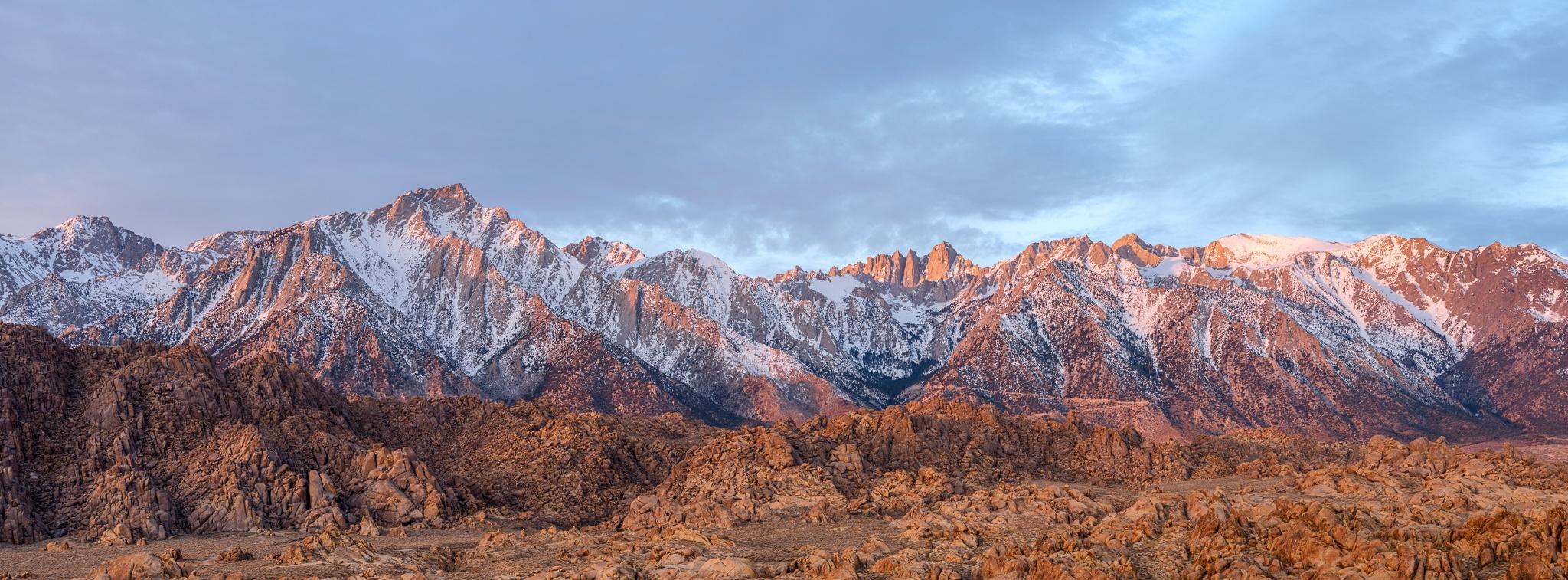
Best Places to Photograph Snow-Covered Mountains in Winter
Winter transforms mountain landscapes in ways no other season can. Where to go, when to go, and what to expect — from Yosemite's granite walls under fresh snow to Zion's red canyon in a storm.
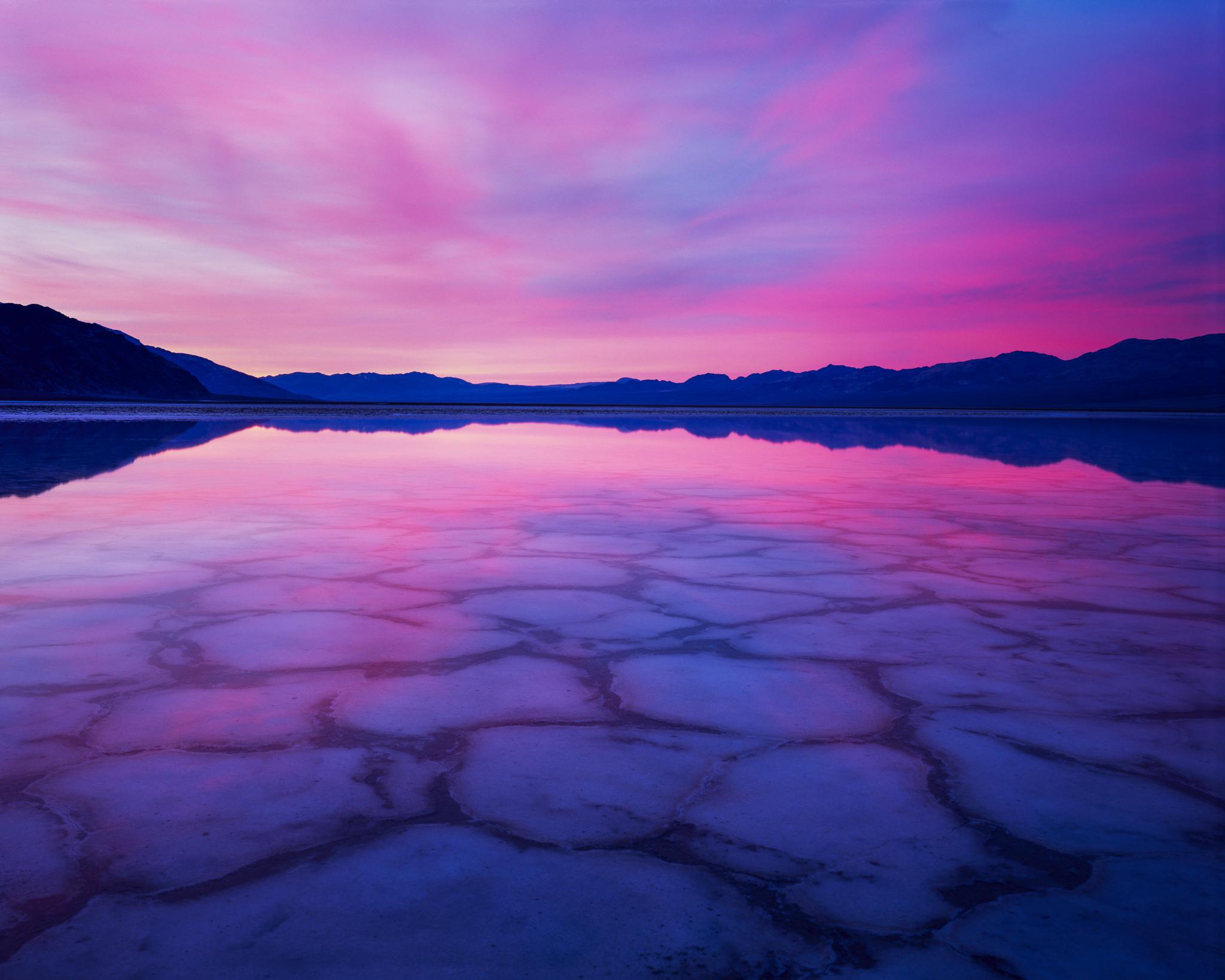
Analog Landscape Photography: Why Film Still Makes Sense in 2026
Most photographers who've tried 4x5 large format film don't go back to digital for their serious landscape work. Here's the honest case for shooting analog in an era when you have no practical reason to.
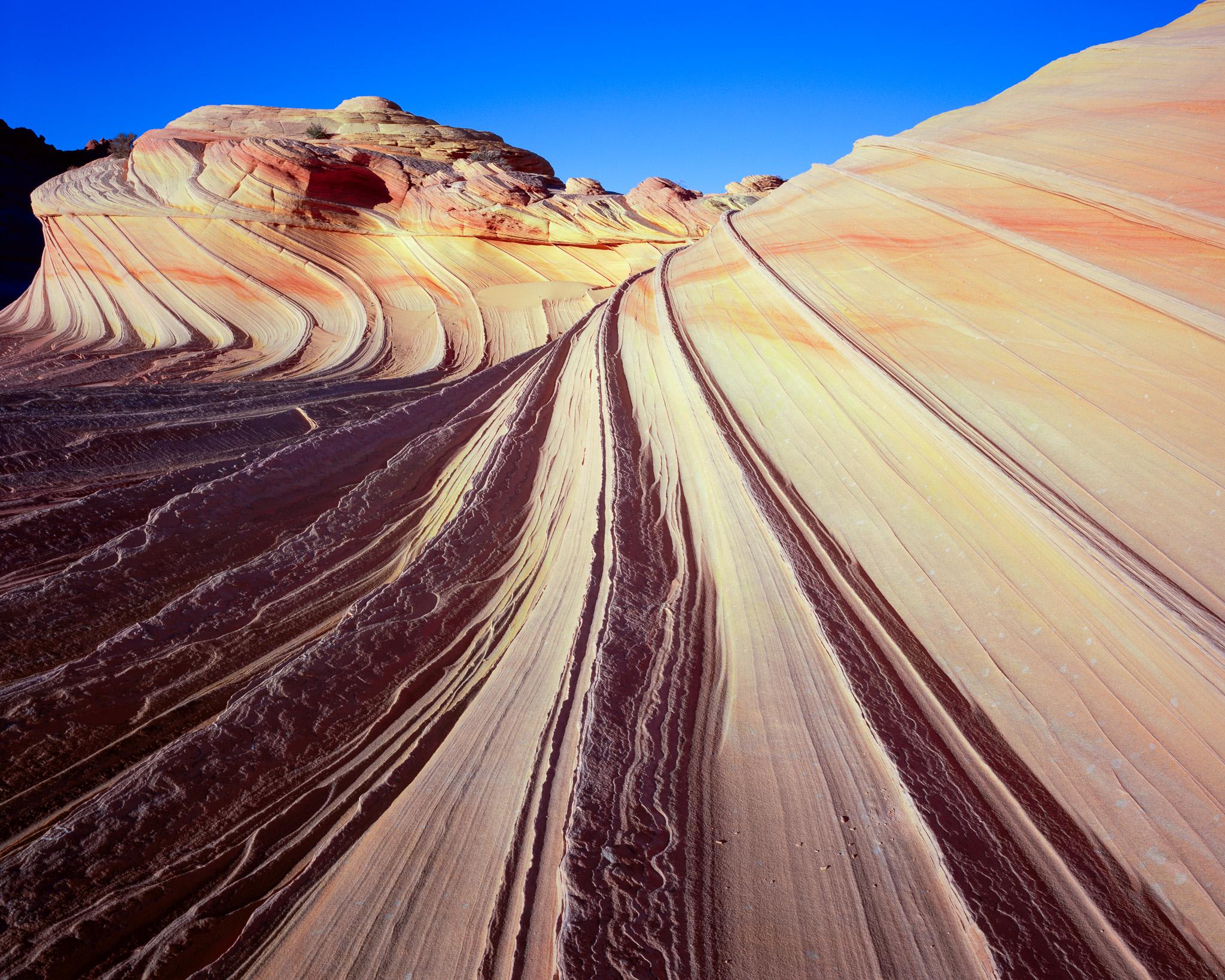
Limited Edition Landscape Prints for Sale: Southwest Fine Art Photography
A look at what makes a limited edition landscape print worth owning — how editions work, what media options hold up over decades, and which prints from the American Southwest collection are still available.
Tags
Marty Quinn
Large format film photographer based in Phoenix, Arizona. Shoots on 4x5 Arca-Swiss view cameras across the American Southwest — Utah, Arizona, Death Valley, and the Colorado mountains. 25+ years behind the lens. Published in Outdoor Photographer magazine (The Last Frame, June 2008). About Marty →